












.jpg)
For years, the only way to take Wegovy was through a weekly injection. With FDA approval of the Wegovy pill in December 2025, you have another option.
If you’re wondering which form fits your life and your health goals, here's what you need to know.
Disclaimer: This article is for educational purposes only and doesn't replace medical advice from a licensed healthcare provider. Wegovy is a prescription medication and isn't right for everyone. Treatment decisions, dosing, and timing should always be considered with your care team.
Quick answer: What's the difference between the Wegovy pill and injection?
The Wegovy pill and injection contain the same active ingredient: semaglutide. Both forms deliver comparable weight management results. The difference is how and how often you take the medication.
The pill is taken once daily, with no more than 4 oz of water, on an empty stomach. It requires a 30-minute wait before eating, drinking anything else, or taking other medications.
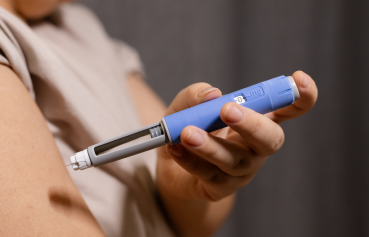
The injection is self-administered once weekly, with no rules about food or the time of day.
Both forms work by mimicking the GLP-1 hormone, which your body produces after you eat. In this way, the medication helps reduce appetite, slow stomach emptying, and support blood sugar regulation.
The best choice depends on your lifestyle, comfort with injections, and daily routine.
Does Wegovy come in pill form? Yes, here's what changed
The FDA approved the Wegovy pill on December 22, 2025, making it the first oral GLP-1 medication approved for chronic weight management in the United States. Before this, Wegovy was only available as a weekly injection.
The pill uses a special absorption-enhancing technology called salcaprozate sodium (SNAC). This helps the active ingredient semaglutide pass through the stomach’s lining and into the bloodstream. Without SNAC, stomach acid would break down semaglutide before your body could absorb it.
Taking the pill on an empty stomach with only a small amount of water gives SNAC the conditions it needs to work.
Oral semaglutide has been available since 2019 as Rybelsus. However, Rybelsus is FDA-approved to treat type 2 diabetes and reduce cardiovascular risk, not help with weight management.
The Wegovy pill is a higher-dose formulation approved specifically for chronic weight management.
6 key differences between the Wegovy pill and injection
Wegovy pill vs injection: How do they compare on weight management?
Side effects: What to expect from each form
The Wegovy pill and injection have a similar side effect profile because they contain the same active ingredient. Most side effects are digestive and occur during the dose escalation period, when doses increase every 30 days.
Most common for both forms:
- Nausea
- Vomiting
- Diarrhea
- Constipation
- Stomach discomfort
In the OASIS 4 trial, digestive side effects were reported in 74% of participants taking the oral tablet, compared with 42.2% of those taking the placebo.
In the STEP 1 trial, digestive side effects were similar for those using the injection, with nausea reported in 44.2% of patients and vomiting in 24.8%.
These symptoms are generally mild to moderate and improve over time for both the pill and injection.
Pill-specific considerations
Daily dosing means your digestive system handles the medication every day rather than once a week. Because semaglutide has a long half-life, daily oral dosing builds toward a steady state without the peak-and-trough pattern of a weekly shot.
If you experience nausea with the pill, it tends to feel consistent rather than tied to any day of the week.
Excessive belching has been reported in 14% of oral semaglutide users, compared with none of the injectable users.
Skin sensitivity (tingling or burning) was reported in 4.9% of pill users, compared with 2% of injection users.
Injection-specific considerations
Injection site reactions, such as redness, itchiness, or irritation are possible with the shot. The pill eliminates this side effect entirely.
Side effects typically improve as your body adjusts during the titration period.
A care team that specializes in weight management can help you ease any side effects, for example, by adjusting your meal timing, food choices, and dose escalation pace.
Check in with your care team if side effects feel impactful and disruptive. You shouldn’t suffer in silence. The knownwell team can work with you to troubleshoot any symptoms that arise.
Important safety information: Thyroid tumors (black box warning)
Both the Wegovy pill and injection carry an FDA black box warning related to thyroid C-cell tumors, based on animal studies. The risk in humans hasn't been fully established.
Tell your care team right away if you notice:
- A lump in your neck
- Difficulty swallowing
- Hoarseness
- Shortness of breath
You shouldn’t take Wegovy if you have a personal or family history of medullary thyroid carcinoma or multiple endocrine neoplasia syndrome type 2.
Wegovy pill vs injection cost: What you'll pay
The list price for both forms of Wegovy exceeds $1,300 per month without insurance. The manufacturer's savings program offers lower pricing for people paying out of pocket.
Wegovy pill:
- 1.5 mg starting dose: $149 per month
- 4 mg dose: $199 per month
- 9 mg and 25 mg maintenance doses: $299 per month
Wegovy injection:
- $349 per month for the first 2 months and maintenance doses
With commercial insurance, co-pays can be as low as $25 per month with a manufacturer savings card for eligible patients.
Coverage varies by plan, and some plans cover one formulation but not the other. Always check with your insurance plan and care team about your options.
The pricing above reflects the current Novo Nordisk savings program as of January 2026 and is subject to change.
Which Wegovy form is right for you? 5 questions to consider
1. How do you feel about needles?
If needle anxiety has kept you from trying GLP-1 medications, the pill removes that barrier.
In clinical studies, most people using the Wegovy autoinjector rated it easy to use and less painful than they had expected.
A real-world survey of 559 Wegovy users found that 91% were comfortable with self-injection.
With that said, a needle-free option is welcomed by others.
2. What’s your morning routine like?
The pill requires a consistent morning: an empty stomach, no more than 4 oz of plain water, and a 30-minute wait before food, other beverages, and other medications.
If you take thyroid medication in the morning, you'll have to take it 30 minutes after the Wegovy pill, then wait another 30–60 minutes before eating or drinking.
Unpredictable mornings or multiple prescriptions can make this process hard to stick to.
3. Do you prefer daily habits or weekly tasks?
Some people find a daily pill easier to fold into an existing routine, like brushing your teeth or taking a vitamin.
Others prefer a once-a-week task, so they don't have to remember to take the medication every day.
4. Do you travel frequently?
The pill stores at room temperature and is easier to pack.
Injections need temperature management and proper disposal of used pens, though Wegovy pens can stay unrefrigerated for up to 28 days.
5. What does your care team recommend?
Your care team considers your health history, other medications, insurance coverage and lifestyle when helping you choose between the two forms.
Making this decision works best as a conversation, not a quick judgment call.
How to switch between the Wegovy pill and injection
Switching between formulations is possible with guidance from your care team.
- From injection to pill: You might start the 25 mg pill 1 week after your last 2.4 mg injection. Your care teams may recommend a lower starting dose, such as 9 mg, depending on your clinical factors.
- From pill to injection: You might start the injection the day after stopping the pill. Your care team adjusts the starting dose based on how well you tolerate the oral version.
No direct milligram-to-milligram equivalence exists between the two forms, and absorption rates differ significantly. For a smooth transition, it’s important to work with a care team experienced in GLP-1 medications.
Still considering the Wegovy pill vs injection?
Choosing between a daily pill and a weekly injection is about finding what works for your life, your body, and your health goals. Having the right support makes that decision easier.
At knownwell, we know that weight management is complex. Hormones, metabolism, genetics, and lifestyle all play a role. We prescribe FDA-approved medications and build a plan around your full picture.
What knownwell offers:
- Clinicians who specialize in obesity medicine and GLP-1 medications
- Registered dietitians for personalized nutrition guidance and ongoing support
- Judgment-free, patient-centered care that focuses on your overall health
- Insurance-friendly visits with a care team that coordinates your treatment
Ready to explore your options?
- Virtual visits: Available from home in all 50 states
- In-person clinics: Boston area, Chicago, Dallas/Fort Worth, and Atlanta, with an NYC location opening later in 2026.
- Insurance accepted: Most major plans offer coverage. See if we accept your insurance.
Book a visit with knownwell to get expert guidance about whether the Wegovy pill or injection is a good fit for you.
Frequently asked questions
Is Wegovy a pill or an injection?
Wegovy is now available as both a pill and an injection. The weekly injection has been available since 2021. The FDA approved the once-daily Wegovy pill in December 2025, making it the first oral GLP-1 approved for chronic weight management in the U.S.
Is the Wegovy pill as effective as the injection?
Yes, the Wegovy pill is as effective as the injection for weight management. Both contain semaglutide and work the same way.
In the OASIS 4 trial, pill users lost an average of 13.6% of body weight over 64 weeks. In the STEP trials, injection users lost 14.9% to 17.4% over 68 weeks.
The best option is the one you can handle consistently and comfortably in the long term.
Can I switch from the Wegovy injection to the pill?
Yes, you can switch from the Wegovy shot to the pill with guidance from your care team.
Transition timing and starting dose depend on your most recent injection dose and how well you tolerate the injectable form.
Does the Wegovy pill have the same side effects as the injection?
The Wegovy pill and injection have similar side effects. These are primarily digestive and include nausea, vomiting, diarrhea, and constipation.
The pill is associated with a higher rate of skin sensitivity (4.9% vs 2%) and more frequent burping.
The injection can cause injection site reactions, which the pill doesn’t.
Is the Wegovy pill cheaper than the injection?
Yes, the Wegovy pill is cheaper than the injection for people paying out of pocket. The maintenance dose costs $299 per month, compared with $349 per month for the injection.
Insurance coverage varies by plan. A manufacturer savings card can reduce costs to as low as $25 per month for eligible patients.
How long does it take to see results with Wegovy?
Results build gradually over the dose escalation period and beyond. In the OASIS 4 trial, weight management results continued to build through 64 weeks on the pill.
For the injection, results continued to build through 68 weeks in the STEP trials.
Dose escalation takes about 90 days for the pill and about 16–20 weeks for the injection. Your care team can help set realistic expectations for your timeline.
Can I take other medications with the Wegovy pill?
Yes, you can take other medications with the Wegovy pill, but not at the same time. The pill requires a 30-minute wait before you have food, drinks, or other medications.
If you take thyroid medication or other morning prescriptions, talk with your care team about the right order for all your medications.
What side effects does the Wegovy pill cause?
The most common Wegovy pill side effects are nausea, vomiting, diarrhea, constipation, stomach discomfort, headache, fatigue, and bloating. Skin sensitivity (tingling or burning) is a pill-specific side effect, reported in 4.9% of pill users.
These are most common during the dose escalation period and generally improve over time.
Source list
Andersen, A., Knop, F. K., Vilsbøll, T. (2021). A pharmacological and clinical overview of oral semaglutide for the treatment of type 2 diabetes. Drugs, 81(9), 1003–1030. doi:10.1007/s40265-021-01499-w. Retrieved from https://pmc.ncbi.nlm.nih.gov/articles/PMC8217049/
Bergmann, N. C., Davies, M. J., Lingvay, I., et al. (2023). Semaglutide for the treatment of overweight and obesity: A review. Diabetes, Obesity and Metabolism, 25(1), 18–35. doi:10.1111/dom.14863. Retrieved from https://dom-pubs.onlinelibrary.wiley.com/doi/10.1111/dom.14863
Buckley, S. T., Bækdal, T. A., Vegge, A., et al. (2018). Transcellular stomach absorption of a derivatized glucagon-like peptide-1 receptor agonist. Science Translational Medicine, 10(467), eaar7047. doi:10.1126/scitranslmed.aar7047. Retrieved from https://pubmed.ncbi.nlm.nih.gov/30429357/
Gabe, M. B. N., Breitschaft, A., Knop, F. K., et al. (2024). Effect of oral semaglutide on energy intake, appetite, control of eating and gastric emptying in adults living with obesity: A randomized controlled trial. Diabetes, Obesity and Metabolism, 26(10), 4480–4489. doi:10.1111/dom.15802. Retrieved from https://dom-pubs.onlinelibrary.wiley.com/doi/full/10.1111/dom.15802
GoodRx. (2026). Wegovy 2026 prices, coupons & savings tips. Retrieved from https://www.goodrx.com/wegovy
Gorgojo-Martínez, J. J., Mezquita-Raya, P., Carretero-Gómez, J., et al. (2023). Clinical recommendations to manage gastrointestinal adverse events in patients treated with GLP-1 receptor agonists: A multidisciplinary expert consensus. Journal of Clinical Medicine, 12(1), 145. doi:10.3390/jcm12010145. Retrieved from https://pmc.ncbi.nlm.nih.gov/articles/PMC9821052/
Klobučar, S., Belančić, A., Bukša, I., et al. (2024). Effectiveness of oral versus injectable semaglutide in adults with type 2 diabetes: Results from a retrospective observational study in Croatia. Diabetology, 5(1), 60–68. doi:10.3390/diabetology5010005. Retrieved from https://www.mdpi.com/2673-4540/5/1/5
Klonoff, D. C., Bassock, S., Engels, E., et al. (2021). Semaglutide single-dose pen-injector: Post hoc analysis of summative usability testing for weight management. Diabetes, Obesity and Metabolism, 23(11), 2590–2594. doi:10.1111/dom.14509. Retrieved from https://pmc.ncbi.nlm.nih.gov/articles/PMC9292194/
Kommu, S. Whitfield, P. (2024). Semaglutide. StatPearls. Retrieved from https://www.ncbi.nlm.nih.gov/books/NBK603723/
Meier, J. J. (2021). Efficacy of semaglutide in a subcutaneous and an oral formulation. Frontiers in Endocrinology, 12, 645617. doi:10.3389/fendo.2021.645617. Retrieved from https://pmc.ncbi.nlm.nih.gov/articles/PMC8269445/
Novo Nordisk. (2025, September 17). Novo Nordisk's oral semaglutide 25 mg (Wegovy in a pill) delivered 16.6% weight loss in people with obesity in a newly published study [Press release]. GlobeNewsWire. Retrieved from https://www.globenewswire.com/news-release/2025/09/17/3152045/0/en/Novo-Nordisk-s-oral-semaglutide-25-mg-Wegovy-in-a-pill-delivered-16-6-weight-loss-in-people-with-obesity-in-a-newly-published-study.html
Novo Nordisk. (2026, January 5). Novo Nordisk's Wegovy pill, the first and only oral GLP-1 for weight loss in adults, now broadly available across America [Press release]. Retrieved from https://www.novonordisk.com/content/nncorp/global/en/news-and-media/news-and-ir-materials/news-details.html?id=916475
Novo Nordisk. (2026). Wegovy price guide. Retrieved from https://www.novocare.com/content/dam/novonordisk/novocare/redesign/pdf/Wegovy_Price_Guide.pdf
Novo Nordisk. (2026). What to pay for Wegovy. Retrieved from https://www.wegovy.com/obesity/what-to-pay-for-wegovy.html
Smits, M. M., Van Raalte, D. H. (2021). Safety of semaglutide. Frontiers in Endocrinology, 12, 645563. doi:10.3389/fendo.2021.645563. Retrieved from https://pmc.ncbi.nlm.nih.gov/articles/PMC8294388/
Snitker, S., Egebjerg, C., Frederiksen, M., et al. (2022). Ease-of-use and acceptability of the novel semaglutide 2.4 mg single-dose pen-injector in people with overweight or obesity in the STEP 8 phase III trial. Diabetes, Obesity and Metabolism, 24(11), 2273–2276. doi:10.1111/dom.14809. Retrieved from https://pmc.ncbi.nlm.nih.gov/articles/PMC9805145/
Solis-Herrera, C., Kane, M. P., Triplitt, C. (2023). Current understanding of sodium N-(8-[2-hydroxylbenzoyl] amino) caprylate (SNAC) as an absorption enhancer: The oral semaglutide experience. Clinical Diabetes, 42(1), 74–86. doi:10.2337/cd22-0118. Retrieved from https://pmc.ncbi.nlm.nih.gov/articles/PMC10788673/
Sørensen, M. S., Pottegård, A., Andersen, N. E., et al. (2025). Survey among adult users of semaglutide for weight loss in Denmark: User characteristics, treatment expectations and experienced effects. Diabetes, Obesity and Metabolism, 27(4), 2214–2222. doi:10.1111/dom.16222. Retrieved from https://pmc.ncbi.nlm.nih.gov/articles/PMC11885084/
Theodorakis, N., Kreouzi, M., Pappas, A., et al. (2024). Beyond calories: Individual metabolic and hormonal adaptations driving variability in weight management — a state-of-the-art narrative review. International Journal of Molecular Sciences, 25(24), 13438. doi:10.3390/ijms252413438. Retrieved from https://pmc.ncbi.nlm.nih.gov/articles/PMC11676201/
U.S. Food and Drug Administration. (2025). RYBELSUS (semaglutide) tablets, for oral use: Prescribing information. Retrieved from https://www.accessdata.fda.gov/drugsatfda_docs/label/2025/213051s024,s028s029lbl.pdf
U.S. Food and Drug Administration. (2025). WEGOVY (semaglutide) injection, for subcutaneous use / WEGOVY (semaglutide) tablets, for oral use: Prescribing information. Retrieved from https://www.accessdata.fda.gov/drugsatfda_docs/label/2025/218316Orig1s000lbl.pdf
Wharton, S., Lingvay, I., Bogdanski, P., et al. (2025). Oral semaglutide at a dose of 25 mg in adults with overweight or obesity. The New England Journal of Medicine, 393(11), 1077–1087. doi:10.1056/NEJMoa2500969. Retrieved from https://www.nejm.org/doi/10.1056/NEJMoa2500969
Wilding, J. P. H., Batterham, R. L., Calanna, S., et al. (2021). Once-weekly semaglutide in adults with overweight or obesity. The New England Journal of Medicine, 384(11), 989–1002. doi:10.1056/NEJMoa2032183. Retrieved from https://www.nejm.org/doi/10.1056/NEJMoa2032183
Yang, X.-D., Yang, Y.-Y. (2024). Clinical pharmacokinetics of semaglutide: A systematic review. Drug Design, Development and Therapy, 18, 2555–2570. doi:10.2147/DDDT.S470826. Retrieved from https://pmc.ncbi.nlm.nih.gov/articles/PMC11215664/
