












If you've been eating the same way you always have, staying active, and still see the scale increasing, you're not imagining it.
Menopause weight gain is real. It's biological, and there are proven strategies that can help.
Disclaimer: This article is for educational purposes only and isn't a substitute for personalized medical advice. Talk to your care team about what's right for your health.
How to lose menopause weight: Quick answer
Menopause weight gain is driven by hormonal shifts, metabolism changes, and muscle loss. It's not because you’re doing anything wrong.
Evidence-based approaches combine nutritional changes, strength-focused movement, and sleep support. For some patients, it may also include FDA-approved weight management medication.
At knownwell, our care team specializes in the hormonal and metabolic shifts that make weight management harder during menopause.
Why menopause weight gain happens (It's not what you think)
Menopause changes how your body stores fat, uses energy, and controls hunger. These changes often start years before your period actually stops. They can happen even if your habits stay the same.
Does estrogen cause weight gain?
Estrogen doesn't directly cause weight gain, but it changes where the body stores fat.
During menopause, estrogen and progesterone levels drop. This shift moves fat from the body’s outer layers toward the belly, where it collects as visceral fat.
Visceral fat affects how your body processes energy. It’s linked to a higher risk for heart disease, type 2 diabetes, and other long-term health conditions.
Perimenopause weight gain: It starts earlier than you think
Perimenopause usually lasts 4 to 8 years on average, but it can begin earlier than most women expect. Many patients first notice changes in their 40s, not their 50s.
Hormones fluctuate in perimenopause; they don’t just drop. It’s these changes, not just the eventual loss of hormones, that drive early weight changes. Research suggests women gain about 1 pound per year during this time, often around the belly.
How metabolism and muscle loss play a role
Muscle mass naturally declines with age. Less muscle means a slower metabolism. As it declines, the same eating and exercise habits can have different results.
Sleep disruption from night sweats and hot flashes raises ghrelin (the hunger hormone). It also lowers leptin (the satiety hormone). Together, they drive up food intake.
Ongoing stress and high cortisol levels also lead to more fat being stored around the belly.
6 Evidence-based strategies to lose weight during menopause
1. Eat to support your metabolism, not to restrict it
Aggressive calorie restriction accelerates muscle loss and further slows metabolism.
Meals with more protein are a smarter choice. Eating more protein helps you keep muscle and feel full longer.
Mediterranean-style eating patterns show benefits for metabolic and heart health in midlife women.
Ultra-processed foods are linked to more visceral fat. Higher added sugar intake is tied to weight gain and increased waist size over time.
Regular alcohol use is also linked to increased belly fat, which is already higher during this time.
2. Make resistance training non-negotiable
Resistance training helps you keep the muscle that drives metabolism during menopause.
Research supports resistance-training exercise at least twice per week for menopausal women.
This training is also linked to better bone density, which declines after menopause. If you're new to strength work, bodyweight exercises, or resistance bands are a good place to start.
3. Protect your sleep like it's a prescription
Poor sleep raises ghrelin and lowers leptin, which makes it harder to manage your weight. Hot flashes and night sweats disrupt sleep stages. This is a health concern, not just a comfort problem.
Things that can help include: keeping your bedroom cool, sticking to a regular sleep schedule, and limiting alcohol. Some women find that alcohol makes night sweats worse.
If sleep problems don't go away, it's worth talking to your doctor about treatment options.
4. Manage stress to manage cortisol
Chronic stress raises the hormone cortisol. Cortisol is directly linked to belly fat storage. Mind-body practices like yoga, meditation, and regular aerobic exercise can help.
Managing stress isn't just lifestyle advice. It's a real tool for weight management during menopause.
5. Ask about hormone therapy - but understand what it can and can't do
Hormone therapy is not a weight loss treatment. Research suggests it may slow the buildup of belly fat and reduce waist size in some patients compared with placebo. Results vary from person to person.
It can also reduce hot flashes and sleep disruption. Getting better sleep and comfort can support weight management.
Hormone therapy isn't right for everyone. It should be a shared decision made with a care team that understands menopause weight gain.
6. Consider FDA-approved weight management medications
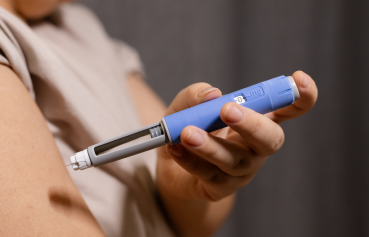
Two FDA-approved weight management medication options are semaglutide, a GLP-1 receptor agonist, and tirzepatide, which targets two gut hormones (GIP and GLP-1).
Studies show these medications lead to real results when paired with good nutrition and lifestyle support.
They work best as part of a bigger care plan. Your care team will decide if they're right for you based on your health history.
Why lifestyle changes alone often aren't enough during menopause
Menopause weight gain comes from hormone changes, a slower metabolism, and shifts in body composition. These changes make it harder for diet and exercise to fully counteract.
Many patients who do everything right still struggle with their weight. This is a medical reality, not a personal failure. For many women in perimenopause, managing weight becomes a real challenge, no matter what they do.
Getting support from a care team works better than trying to manage everything on your own. This means having both medical and nutritional support working together. Your care team can help decide if medications or hormone therapy are right for you.
Need more support with how to lose weight during menopause?
Menopause weight management is more complex than eating less and moving more. Hormones, metabolism, muscle loss, and sleep disruption all shape how your body responds. Navigating that alone is difficult.
At knownwell, our team takes a whole-person approach to weight management during menopause. We combine medical care with the support you need to see real results.
What knownwell offers:
- Physicians specializing in metabolic health and menopause-related weight management
- Registered dietitians for medical nutrition therapy and personalized food guidance
- FDA-approved weight management medications when clinically appropriate
- Compassionate, judgment-free care from clinicians who understand what midlife weight changes actually involve
Ready to get started?
- Virtual visits: Available from home in all 50 states
- In-person clinics: Boston area, Chicago, Dallas-Fort Worth area, New York City, and Atlanta
- Insurance accepted: Most major plans offer coverage. See if we accept your insurance.
Contact knownwell today. Your care team will work with you to understand how to lose menopause weight.
Frequently asked questions
What is the fastest way to lose weight during menopause?
The fastest way to lose weight during menopause isn't a single fix. It's combining strategies that address the underlying biology.
Strength training at least twice per week to keep muscle mass and support metabolism. Protein-forward eating reduces muscle loss and helps keep you full.
For qualified patients, FDA-approved GLP-1 medications and lifestyle support can significantly improve outcomes.
Why is menopause weight gain so hard to reverse?
Menopause weight gain is hard to reverse because of the changes that drive it. These go beyond diet and exercise.
As estrogen drops, your body stores more fat around the belly, where it's tougher to lose. You also lose muscle, which slows your metabolism. This means your body burns fewer calories - even if your habits haven't changed.
Poor sleep increases hunger hormones. Higher stress levels (and higher cortisol) lead to more fat storage. It's not a willpower problem. It's a biology problem that responds best to medical support.
Does estrogen cause weight gain during perimenopause?
Estrogen doesn't directly cause weight gain during perimenopause. But it does change where the body stores fat. As estrogen fluctuates and eventually declines, fat storage shifts toward the abdomen.
This is called visceral fat. It is metabolically active and linked to a higher risk for heart disease and type 2 diabetes.
At what age does perimenopause weight gain start?
Perimenopause weight gain can start earlier than most people expect. Perimenopause lasts 4 to 8 years on average and often begins in the early to mid-40s.
Shifting hormone levels drive early changes in weight and metabolism. If you're noticing changes in your 40s, that's clinically normal.
Can you lose menopause belly fat without hormone therapy?
Yes, you can reduce menopause belly fat without hormone therapy. These approaches target the main reasons menopause makes belly fat harder to shift:
- Resistance training helps hold on to muscle, which keeps your metabolism working harder
- Eating more protein supports muscle and helps you feel full longer
- Managing stress lowers cortisol, which drives fat storage around the middle
- Improving sleep helps balance the hormones that control hunger
For some patients, FDA-approved weight management medications are also an option.
Are GLP-1 medications safe for women in menopause?
GLP-1 medications are FDA-approved to help eligible adults manage their weight long-term. This includes many women in menopause.
Research on postmenopausal women shows real weight-loss results when these medications are used with medical support.
Like all medications, they aren't right for everyone. Your care team will review your health history, current medications, and risk factors to determine whether they're a good fit.
What should I eat to support weight management during menopause?
To support weight management during menopause, focus on eating enough protein, fiber, fruits, vegetables, and whole grains. A Mediterranean-style nutrition pattern is great for both your metabolism and heart health during midlife. It's based on whole foods, healthy fats, and lean protein.
Insulin resistance often increases after menopause. Choosing whole over ultra-processed food and limiting added sugars can help manage this.
Does menopause weight gain ever stop on its own?
Menopause weight gain doesn't reliably stop on its own. The driving hormonal and metabolic shifts tend to last well into postmenopause.
Starting early with nutrition, movement, and medical care leads to better long-term outcomes.
Can a registered dietitian help with menopause weight management?
Yes, a registered dietitian can help with menopause weight management. They can build an eating plan just for you and make sure you're getting enough protein to keep muscle. They can also help you manage blood sugar to reduce belly fat.
Source list
Cava, E., Yeat, N. C., Mittendorfer, B. (2017). Preserving healthy muscle during weight loss. Advances in Nutrition, 8(3), 511-519. doi:10.3945/an.116.014506. Retrieved from https://pmc.ncbi.nlm.nih.gov/articles/PMC5421125/
Chait, A., den Hartigh, L. J. (2020). Adipose tissue distribution, inflammation and its metabolic consequences, including diabetes and cardiovascular disease. Frontiers in Cardiovascular Medicine, 7, 22. doi:10.3389/fcvm.2020.00022. Retrieved from https://pmc.ncbi.nlm.nih.gov/articles/PMC7052117/
Chopra, S., Sharma, K. A., Ranjan, P., et al. (2019). Weight management module for perimenopausal women: A practical guide for gynecologists. Journal of Mid-Life Health, 10(4), 165-172. doi:10.4103/jmh.JMH_155_19. Retrieved from https://pmc.ncbi.nlm.nih.gov/articles/PMC6947726/
Delamater, L., Santoro, N. (2018). Management of the perimenopause. Clinical Obstetrics and Gynecology, 61(3), 419-432. doi:10.1097/GRF.0000000000000389. Retrieved from https://pmc.ncbi.nlm.nih.gov/articles/PMC6082400/
Endy, E. J., Yi, S.-Y., Steffen, B. T., et al. (2024). Added sugar intake is associated with weight gain and risk of developing obesity over 30 years: The CARDIA study. Nutrition, Metabolism and Cardiovascular Diseases, 34(2), 466-474. doi:10.1016/j.numecd.2023.10.022. Retrieved from https://pmc.ncbi.nlm.nih.gov/articles/PMC11253751/
Erdélyi, A., Pálfi, E., Tűű, L., et al. (2023). The importance of nutrition in menopause and perimenopause - a review. Nutrients, 16(1), 27. doi:10.3390/nu16010027. Retrieved from https://pmc.ncbi.nlm.nih.gov/articles/PMC10780928/
Gomes, S., Ramalhete, C., Ferreira, I., et al. (2023). Sleep patterns, eating behavior and the risk of noncommunicable diseases. Nutrients, 15(11), 2462. doi:10.3390/nu15112462. Retrieved from https://pmc.ncbi.nlm.nih.gov/articles/PMC10255419/
Gonçalves, C., Moreira, H., Santos, R. (2024). Systematic review of Mediterranean diet interventions in menopausal women. AIMS Public Health, 11(1), 110-129. doi:10.3934/publichealth.2024005. Retrieved from https://pmc.ncbi.nlm.nih.gov/articles/PMC11007410/
Hang, S., Xiaoyu, L., Jue, W., et al Z. (2025). Effects of resistance training and aerobic training on improving the composition of middle-aged adults with obesity in an interventional study. Scientific Reports, 15, 33972. doi:10.1038/s41598-025-11076-w. Retrieved from https://pmc.ncbi.nlm.nih.gov/articles/PMC12484634/
Heymsfield, S. B., Thomas, D. M., Bosy-Westphal, A., et al. (2019). The anatomy of resting energy expenditure: Body composition mechanisms. European Journal of Clinical Nutrition, 73(2), 166-171. doi:10.1038/s41430-018-0319-3. Retrieved from https://pmc.ncbi.nlm.nih.gov/articles/PMC6410366/
Hurtado, M. D., Tama, E., Fansa, S., et al. (2024). Weight loss response to semaglutide in postmenopausal women with and without hormone therapy use. Menopause, 31(4), 266-274. doi:10.1097/GME.0000000000002310. Retrieved from https://pmc.ncbi.nlm.nih.gov/articles/PMC11209769/
Isenmann, E., Kaluza, D., Havers, T., et al. (2023). Resistance training alters body composition in middle-aged women depending on menopause - a 20-week control trial. BMC Women's Health, 23, 526. doi:10.1186/s12905-023-02671-y. Retrieved from https://pmc.ncbi.nlm.nih.gov/articles/PMC10559623/
Janssen, T. A. H., Van Every, D. W., Phillips, S. M. (2023). The impact and utility of very low-calorie diets: the role of exercise and protein in preserving skeletal muscle mass. Current Opinion in Clinical Nutrition and Metabolic Care, 26(6), 521-527. doi:10.1097/MCO.0000000000000980. Retrieved from https://pmc.ncbi.nlm.nih.gov/articles/PMC10552824/
Joffe, H., Massler, A., Sharkey, K. M. (2010). Evaluation and management of sleep disturbance during the menopause transition. Seminars in Reproductive Medicine, 28(5), 404-421. doi:10.1055/s-0030-1262900. Retrieved from https://pmc.ncbi.nlm.nih.gov/articles/PMC3736837/
Knight, M. G., Anekwe, C., Washington, K., et al. (2021). Weight regulation in menopause. Menopause, 28(8), 960-965. doi:10.1097/GME.0000000000001792. Retrieved from https://pmc.ncbi.nlm.nih.gov/articles/PMC8373626/
Kodoth, V., Scaccia, S., Aggarwal, B. (2022). Adverse changes in body composition during the menopausal transition and relation to cardiovascular risk: A contemporary review. Women's Health Reports, 3(1), 573-581. doi:10.1089/whr.2021.0119. Retrieved from https://pmc.ncbi.nlm.nih.gov/articles/PMC9258798/
Konieczna, J., Morey, M., Abete, I., et al. (2021). Contribution of ultra-processed foods in visceral fat deposition and other adiposity indicators: Prospective analysis nested in the PREDIMED-Plus trial. Clinical Nutrition, 40(6), 4290-4300. doi:10.1016/j.clnu.2021.01.019. Retrieved from https://pubmed.ncbi.nlm.nih.gov/33610419/
Kravitz, H. M., Kazlauskaite, R., Joffe, H. (2018). Sleep, health, and metabolism in midlife women and menopause: Food for thought. Obstetrics and Gynecology Clinics of North America, 45(4), 679-694. doi:10.1016/j.ogc.2018.07.008. Retrieved from https://pmc.ncbi.nlm.nih.gov/articles/PMC6338227/
Kwon, R., Chang, Y., Kim, Y., et al. (2022). Alcohol consumption patterns and risk of early-onset vasomotor symptoms in premenopausal women. Nutrients, 14(11), 2276. doi:10.3390/nu14112276. Retrieved from https://pmc.ncbi.nlm.nih.gov/articles/PMC9182895/
Larsson, L., Degens, H., Li, M., et al. (2019). Sarcopenia: Aging-related loss of muscle mass and function. Physiological Reviews, 99(1), 427-511. doi:10.1152/physrev.00061.2017. Retrieved from https://pmc.ncbi.nlm.nih.gov/articles/PMC6442923/
Lovre, D., Lindsey, S. H., Mauvais-Jarvis, F. (2017). Effect of menopausal hormone therapy on components of the metabolic syndrome. Therapeutic Advances in Cardiovascular Disease, 11(1), 33-43. doi:10.1177/1753944716649358. Retrieved from https://pmc.ncbi.nlm.nih.gov/articles/PMC5933555/
Marlatt, K. L., Pitynski-Miller, D. R., Gavin, K. M., et al. (2022). Body composition and cardiometabolic health across the menopause transition. Obesity, 30(1), 14-27. doi:10.1002/oby.23289. Retrieved from https://pmc.ncbi.nlm.nih.gov/articles/PMC8972960/
Martínez-Urbistondo, D., Perez-Diaz-del-Campo, N., Landecho, M. F., et al. (2024). Alcohol drinking impacts on adiposity and steatotic liver disease: Concurrent effects on metabolic pathways and cardiovascular risks. Current Obesity Reports, 13(3), 461-474. doi:10.1007/s13679-024-00560-5. Retrieved from https://pmc.ncbi.nlm.nih.gov/articles/PMC11306502/
Mishra, N., Mishra, V. N., & Devanshi. (2011). Exercise beyond menopause: Dos and don'ts. Journal of Mid-Life Health, 2(2), 51-56. doi:10.4103/0976-7800.92524. Retrieved from https://pmc.ncbi.nlm.nih.gov/articles/PMC3296386/
Moon, J., Koh, G. (2020). Clinical evidence and mechanisms of high-protein diet-induced weight loss. Journal of Obesity & Metabolic Syndrome, 29(3), 166-173. doi:10.7570/jomes20028. Retrieved from https://pmc.ncbi.nlm.nih.gov/articles/PMC7539343/
Most, J., Redman, L. M. (2020). Impact of calorie restriction on energy metabolism in humans. Experimental Gerontology, 133, 110875. doi:10.1016/j.exger.2020.110875. Retrieved from https://pmc.ncbi.nlm.nih.gov/articles/PMC9036397/
Obaya, H. E., Abdeen, H. A., Salem, A. A., et al. (2023). Effect of aerobic exercise, slow deep breathing and mindfulness meditation on cortisol and glucose levels in women with type 2 diabetes mellitus: A randomized controlled trial. Frontiers in Physiology, 14, 1186546. doi:10.3389/fphys.2023.1186546. Retrieved from https://pmc.ncbi.nlm.nih.gov/articles/PMC10373883/
Paramsothy, P., Harlow, S. D., Nan, B., et al. (2017). Duration of the menopausal transition is longer in women with young age at onset: The multi-ethnic Study of Women's Health Across the Nation. Menopause, 24(2), 142-149. doi:10.1097/GME.0000000000000736. Retrieved from https://pmc.ncbi.nlm.nih.gov/articles/PMC5266650/
Patel, P., Patil, S., Kaur, N. (2025). Estrogen and metabolism: Navigating hormonal transitions from perimenopause to postmenopause. Journal of Mid-Life Health, 16(3), 247-256. doi:10.4103/jmh.jmh_75_25. Retrieved from https://pmc.ncbi.nlm.nih.gov/articles/PMC12431702/
Rogerson, O., Wilding, S., Prudenzi, A., et al. (2024). Effectiveness of stress management interventions to change cortisol levels: A systematic review and meta-analysis. Psychoneuroendocrinology, 158, 106415. doi:10.1016/j.psyneuen.2023.106415. Retrieved from https://www.sciencedirect.com/science/article/pii/S0306453023003931
Sievenpiper, J. L., Ard, J., Blüher, M., et al. (2026). Nutritional and lifestyle supportive care recommendations for management of obesity with GLP-1-based therapies: An expert consensus statement using a modified Delphi approach. Obesity Pillars, 17, 100228. doi:10.1016/j.obpill.2025.100228. Retrieved from https://pmc.ncbi.nlm.nih.gov/articles/PMC12768930/
Tchang, B. G., Mihai, A. C., Stefanski, A., et al. (2025). Body weight reduction in women treated with tirzepatide by reproductive stage: A post hoc analysis from the SURMOUNT program. Obesity, 33(5), 851-860. doi:10.1002/oby.24254. Retrieved from https://pmc.ncbi.nlm.nih.gov/articles/PMC12015656/
Troìa, L., Garassino, M., Volpicelli, A. I., et al. (2025). Sleep disturbance and perimenopause: A narrative review. Journal of Clinical Medicine, 14(5), 1479. doi:10.3390/jcm14051479. Retrieved from https://pmc.ncbi.nlm.nih.gov/articles/PMC11901009/
van der Valk, E. S., Savas, M., van Rossum, E. F. C. (2018). Stress and obesity: Are there more susceptible individuals? Current Obesity Reports, 7(2), 193-203. doi:10.1007/s13679-018-0306-y. Retrieved from https://pmc.ncbi.nlm.nih.gov/articles/PMC5958156/
Wang, J.-Y., Wang, Q.-W., Yang, X.-Y., et al. (2023). GLP-1 receptor agonists for the treatment of obesity: Role as a promising approach. Frontiers in Endocrinology, 14, 1085799. doi:10.3389/fendo.2023.1085799. Retrieved from https://pmc.ncbi.nlm.nih.gov/articles/PMC9945324/
Zhao, F., Su, W., Sun, Y., et al. (2025). Optimal resistance training parameters for improving bone mineral density in postmenopausal women: A systematic review and meta-analysis. Journal of Orthopaedic Surgery and Research, 20, 523. doi:10.1186/s13018-025-05890-1. Retrieved from https://pmc.ncbi.nlm.nih.gov/articles/PMC12107943/
