










How to lose menopause weight: 6 science-backed strategies
Still gaining weight during menopause? Learn how to lose menopause weight by addressing the hormonal and metabolic shifts driving the change.
Medically review by Angela Fitch, MD
Last update May 19, 2026

WHAT’S ON THIS PAGE


IN THIS ARTICLE
If you've been eating the same way you always have, staying active, and still see the scale increasing, you're not imagining it.
Menopause weight gain is real. It's biological, and there are proven strategies that can help.
Disclaimer: This article is for educational purposes only and isn't a substitute for personalized medical advice. Talk to your care team about what's right for your health.
How to lose menopause weight: Quick answer
Menopause weight gain is driven by hormonal shifts, metabolism changes, and muscle loss. It's not because you’re doing anything wrong.
Evidence-based approaches combine nutritional changes, strength-focused movement, and sleep support. For some patients, it may also include FDA-approved weight management medication.
At knownwell, our care team specializes in the hormonal and metabolic shifts that make weight management harder during menopause.
Why menopause weight gain happens (It's not what you think)
Menopause changes how your body stores fat, uses energy, and controls hunger. These changes often start years before your period actually stops. They can happen even if your habits stay the same.
Does estrogen cause weight gain?
Estrogen doesn't directly cause weight gain, but it changes where the body stores fat.
During menopause, estrogen and progesterone levels drop. This shift moves fat from the body’s outer layers toward the belly, where it collects as visceral fat.
Visceral fat affects how your body processes energy. It’s linked to a higher risk for heart disease, type 2 diabetes, and other long-term health conditions.
Perimenopause weight gain: It starts earlier than you think
Perimenopause usually lasts 4 to 8 years on average, but it can begin earlier than most women expect. Many patients first notice changes in their 40s, not their 50s.
Hormones fluctuate in perimenopause; they don’t just drop. It’s these changes, not just the eventual loss of hormones, that drive early weight changes. Research suggests women gain about 1 pound per year during this time, often around the belly.
How metabolism and muscle loss play a role
Muscle mass naturally declines with age. Less muscle means a slower metabolism. As it declines, the same eating and exercise habits can have different results.
Sleep disruption from night sweats and hot flashes raises ghrelin (the hunger hormone). It also lowers leptin (the satiety hormone). Together, they drive up food intake.
Ongoing stress and high cortisol levels also lead to more fat being stored around the belly.
6 Evidence-based strategies to lose weight during menopause
1. Eat to support your metabolism, not to restrict it
Aggressive calorie restriction accelerates muscle loss and further slows metabolism.
Meals with more protein are a smarter choice. Eating more protein helps you keep muscle and feel full longer.
Mediterranean-style eating patterns show benefits for metabolic and heart health in midlife women.
Ultra-processed foods are linked to more visceral fat. Higher added sugar intake is tied to weight gain and increased waist size over time.
Regular alcohol use is also linked to increased belly fat, which is already higher during this time.
2. Make resistance training non-negotiable
Resistance training helps you keep the muscle that drives metabolism during menopause.
Research supports resistance-training exercise at least twice per week for menopausal women.
This training is also linked to better bone density, which declines after menopause. If you're new to strength work, bodyweight exercises, or resistance bands are a good place to start.
3. Protect your sleep like it's a prescription
Poor sleep raises ghrelin and lowers leptin, which makes it harder to manage your weight. Hot flashes and night sweats disrupt sleep stages. This is a health concern, not just a comfort problem.
Things that can help include: keeping your bedroom cool, sticking to a regular sleep schedule, and limiting alcohol. Some women find that alcohol makes night sweats worse.
If sleep problems don't go away, it's worth talking to your doctor about treatment options.
4. Manage stress to manage cortisol
Chronic stress raises the hormone cortisol. Cortisol is directly linked to belly fat storage. Mind-body practices like yoga, meditation, and regular aerobic exercise can help.
Managing stress isn't just lifestyle advice. It's a real tool for weight management during menopause.
5. Ask about hormone therapy - but understand what it can and can't do
Hormone therapy is not a weight loss treatment. Research suggests it may slow the buildup of belly fat and reduce waist size in some patients compared with placebo. Results vary from person to person.
It can also reduce hot flashes and sleep disruption. Getting better sleep and comfort can support weight management.
Hormone therapy isn't right for everyone. It should be a shared decision made with a care team that understands menopause weight gain.
6. Consider FDA-approved weight management medications
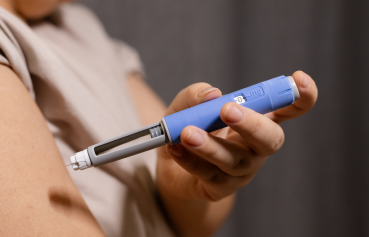
Two FDA-approved weight management medication options are semaglutide, a GLP-1 receptor agonist, and tirzepatide, which targets two gut hormones (GIP and GLP-1).
Studies show these medications lead to real results when paired with good nutrition and lifestyle support.
They work best as part of a bigger care plan. Your care team will decide if they're right for you based on your health history.
Why lifestyle changes alone often aren't enough during menopause
Menopause weight gain comes from hormone changes, a slower metabolism, and shifts in body composition. These changes make it harder for diet and exercise to fully counteract.
Many patients who do everything right still struggle with their weight. This is a medical reality, not a personal failure. For many women in perimenopause, managing weight becomes a real challenge, no matter what they do.
Getting support from a care team works better than trying to manage everything on your own. This means having both medical and nutritional support working together. Your care team can help decide if medications or hormone therapy are right for you.
Need more support with how to lose weight during menopause?
Menopause weight management is more complex than eating less and moving more. Hormones, metabolism, muscle loss, and sleep disruption all shape how your body responds. Navigating that alone is difficult.
At knownwell, our team takes a whole-person approach to weight management during menopause. We combine medical care with the support you need to see real results.
What knownwell offers:
- Physicians specializing in metabolic health and menopause-related weight management
- Registered dietitians for medical nutrition therapy and personalized food guidance
- FDA-approved weight management medications when clinically appropriate
- Compassionate, judgment-free care from clinicians who understand what midlife weight changes actually involve
Ready to get started?
- Virtual visits: Available from home in all 50 states
- In-person clinics: Boston area, Chicago, Dallas-Fort Worth area, New York City, and Atlanta
- Insurance accepted: Most major plans offer coverage. See if we accept your insurance.
Contact knownwell today. Your care team will work with you to understand how to lose menopause weight.
Frequently asked questions
Starting July 1, 2026, Medicare Part D will cover GLP-1 medications — including semaglutide products — when prescribed for weight management through the Medicare GLP-1 Bridge program.If your GLP-1 is already covered under Part D for another diagnosis, you may not be eligible for the bridge program separately.
Yes. Both Wegovy (semaglutide) and Zepbound (tirzepatide) are FDA-approved for weight management will be covered under the Medicare GLP-1 Bridge program starting July 1, 2026, for eligible patients.
Coverage is subject to prior authorization approval and your plan's formulary. Note: only the KwikPen formulation of Zepbound is included in the Bridge — the single-dose vial and pen are not.
Starting July 1, 2026, Medicare will cover GLP-1 medications — including semaglutide products like Wegovy — for weight management through the Medicare GLP-1 Bridge program.
Ozempic (semaglutide) is FDA-approved for type 2 diabetes, not weight management, so it is not included in the Bridge program. Wegovy, the weight-management formulation of semaglutide, is covered.
If your GLP-1 is already covered under Part D for another diagnosis (such as cardiovascular disease or sleep apnea), the Bridge program may not apply separately.
The Medicare Bridge program covers patients based on BMI and clinical criteria:
• BMI 35 or higher — no additional diagnosis required
• BMI 30 or higher — with heart failure with preserved ejection fraction (HFpEF), uncontrolled hypertension, or chronic kidney disease (stage 3a+)
• BMI 27 or higher — with pre-diabetes, prior heart attack (MI), prior stroke, or symptomatic peripheral artery disease
Your knownwell clinician will confirm which criteria apply at your visit.
Possibly, yes. If you were already prescribed a GLP-1 for weight management before July 1, 2026, you may still qualify — even if your current BMI has changed since you started. Your knownwell clinician will attest in the prior authorization that you met the eligibility criteria when you first began the medication.
For example, if you started a GLP-1 in 2024 with a BMI of 37 but now have a BMI of 33 due to weight loss, your clinician can document the original qualifying BMI to support your PA.
No, not yet. The current coverage with the Medicare Bridge program is running through December 31, 2027. After that, Centers for Medicare & Medicaid Services will evaluate outcomes and make a decision on extending coverage.
Advocates and the obesity medicine community are pushing for permanent coverage through legislation like the Treat and Reduce Obesity Act (TROA).
Yes, if your Medicare Advantage plan includes drug coverage (called an MA-PD plan). Most Medicare Advantage plans include Part D drug coverage, which means you are eligible for the Medicare GLP-1 Bridge program if you meet the clinical criteria.
Check with your plan directly or call knownwell to confirm. If you're unsure whether you have a standalone Part D plan or Medicare Advantage with drug coverage, look at your plan card or call 1-800-MEDICARE.
Yes, if your Medicare Advantage plan includes drug coverage (called an MA-PD plan). Most Medicare Advantage plans include Part D drug coverage, which means you are eligible for the Medicare GLP-1 Bridge program if you meet the clinical criteria.
Check with your plan directly or call knownwell to confirm. If you're unsure whether you have a standalone Part D plan or Medicare Advantage with drug coverage, look at your plan card or call 1-800-MEDICARE.
If your GLP-1 prior authorization is denied, you have the right to appeal.
At knownwell, our prior authorization team handles the behind-the-scenes work — gathering documentation, coordinating with your clinician, and advocating for your coverage — so you can stay focused on your health.
Yes — starting July 1, 2026, for eligible patients who meet the BMI criteria above, even without a diabetes diagnosis. This is the major shift: previously, Medicare coverage required a diabetes or cardiovascular diagnosis. The Bridge program extends coverage to obesity management as a standalone indication.
This change comes through the Medicare GLP-1 Bridge program, a demonstration authorized by the CMS Innovation Center (CMMI) under the Social Security Act's Section 1115A. The program is designed to test whether covering these medications reduces hospitalizations, improves outcomes, and lowers long-term Medicare costs.
The Treat and Reduce Obesity Act (TROA), long advocated by obesity medicine specialists, has pushed for exactly this kind of coverage expansion for years. This demonstration is the first concrete step toward making it a permanent benefit.
Through the Medicare GLP-1 Bridge, you pay a flat $50 per monthly supply. Through standard Medicare Part D, your cost depends on your specific plan, your diagnosis, your deductible, and which tier the medication falls on in your plan's formulary.
Once you get started with knownwell, our team can help you understand which pathway applies to you and what to expect for your costs.
Disclaimers
Sources