



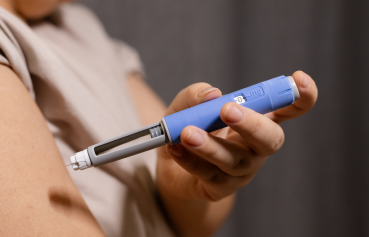









To choose between tirzepatide (Zepbound®) vs semaglutide (Wegovy®) for weight loss, you should know they work in different ways and understand how effective they are at helping with weight management.
How do tirzepatide and semaglutide compare at a glance?
Tirzepatide (Zepbound®) works on two hormone pathways, while semaglutide (Wegovy®) works on one.
In other words, semaglutide activates only the GLP-1 receptor, and tirzepatide activates both the GIP and GLP-1 receptors.
These differences affect how hungry you feel and how much weight you lose.
They are both injectable medicines that can help you support your metabolic health and lose weight.
While they are often grouped together, they are not the same, and one may be better at meeting your own specific weight loss goals.
Disclaimer: This article is for informational purposes only and is not a substitute for medical advice, diagnosis, or treatment. Medications like tirzepatide and semaglutide affect people differently, and your care team is the best resource for guidance about what is safe and appropriate for you.
Overview: The basics at a glance
What is GLP-1?
GLP-1 is a hormone your body releases after eating that slows how quickly food leaves your stomach and sends signals of fullness to the brain, supporting insulin release when blood sugar goes up.
Medications like semaglutide copy this hormone’s effects. They can lower your appetite and help regulate your blood sugar.
What is GIP?
GIP is another hormone your body releases after you eat that helps your body release insulin when your blood sugar rises in such instances. GIP may also play a role in how your body uses energy.
Tirzepatide’s two-hormone approach improves how your body uses insulin and processes sugar in ways that go beyond just losing weight.
Both medicines are FDA-approved for adults with obesity or overweight, who also have a weight-related condition, such as type 2 diabetes.
They are taken once per week and are typically used long-term when medically appropriate.
Because both affect blood sugar, many people with prediabetes or type 2 diabetes may see improvements in blood sugar as well.
How do tirzepatide and semaglutide work differently?
Semaglutide works on one hormone pathway (GLP-1 receptor), while tirzepatide works on two-hormone pathways (GLP-1 and GIP receptor).
Semaglutide slows stomach emptying, helps people feel full sooner, supports healthy insulin release, and reduces appetite.
These effects have been well-documented and similar to the way the body uses GLP-1 after meals.
Tirzepatide’s two-hormone activity may strengthen your appetite control, insulin response, and your body’s ability to regulate energy use.
This combined pattern is one reason tirzepatide often produces greater average weight loss than semaglutide.
Result: tirzepatide vs semaglutide
Tirzepatide works in more than one way, but that does not make it the best choice for everyone.
People respond differently to GLP-1 medicines. Your genetics, metabolism, and health conditions can all affect how well a medication works for you.
Tirzepatide vs semaglutide for weight loss: Which delivers more results?
Tirzepatide has shown greater average weight loss than semaglutide across several strong studies.
People taking tirzepatide were more likely to lose at least 10 to 15% of their body weight compared with people taking semaglutide.
In a 72-week study, people living with obesity but without type 2 diabetes taking tirzepatide lost more weight than people taking semaglutide.
People taking the highest dose of tirzepatide (10 mg or 15 mg once a week) lost about 20.2% of their body weight, while those taking semaglutide (1.7 mg or 2.4 mg once a week) lost about 13.7%.
People on tirzepatide were also more likely than those on semaglutide to lose at least 10%, 15%, 20%, or 25% of their body weight.
Other research backs this up. Tirzepatide leads to greater average weight loss than semaglutide over the first six months of treatment.
The differences between tirzepatide versus semaglutide display how acting on both GIP/GLP-1 may influence appetite, metabolism, and energy use.
Results: tirzepatide vs semaglutide
Studies suggest that tirzepatide leads to more weight loss on average.
Still, the best choice depends on your body, your health history, and how you respond to treatment.
Side effects: Which one feels better day-to-day?
Neither medication consistently feels better day-to-day and both can cause nausea, constipation, diarrhea, vomiting, and fatigue, especially during dose increases.
Tirzepatide and semaglutide have similar rates of stomach-related side effects. Most symptoms were mild to moderate and happened during dose increases.
Results: tirzepatide vs semaglutide
Neither medicine consistently has fewer side effects. People tolerate the medicines differently, so what feels manageable for one person may feel harder for someone else.
Check in with your provider if side effects feel impactful and disruptive. You shouldn't suffer in silence. Our team will work with you to troubleshoot any symptoms that arise.
knownwell tips for managing side effects
Our knownwell care team can help if you are struggling with side effects from either tirzepatide or semaglutide.
Our team will work with you to find strategies that can help you, such as:
- Increasing doses slowly
- Choosing smaller meals
- Drinking enough water
- Stop eating when you start to feel full
Cost and insurance: Which is easier to access?
Neither medication is clearly easier to access; both require insurance approval and can be expensive, though tirzepatide may offer better long-term value with better overall cost.
What the research shows
A 68-week study in adults with overweight or obesity (without diabetes) found that tirzepatide gave more health improvement for the cost compared with semaglutide.
In that study, tirzepatide helped people lose more weight and improve health markers while costing less per amount of health gained.
Looking at adults with type 2 diabetes over a longer period, tirzepatide (at the 10 mg and 15 mg doses) gave better long-term value than semaglutide.
What this means for real-life access
Even though tirzepatide showed better value in these studies, insurance coverage varies between plans.
Both medications can be expensive without insurance. Your doctor may also need to show that you meet specific medical criteria before insurance approves the prescription.
Prior authorization, which is extra paperwork from your doctor, is common for both medicines.
Results: tirzepatide vs semaglutide
Although tirzepatide offers better value for the health benefits it provides across the research, you should consider which of the medications your insurance will cover fits your health needs and you tolerate well.
How knownwell helps you choose the right medication
At knownwell, we help you understand:
- What your insurance covers
- What paperwork you need
- Which medication is easier to access
- Whether you qualify for any savings programs
- How to plan for long-term costs
We will guide you through the entire approval process so there are no surprises.
Which is right for you based on your health goals?
The right medication for you depends on your specific health goals, and both tirzepatide and semaglutide help with weight management and blood sugar control, but people respond to them in different ways.
Tirzepatide may be a good option for people who need to lose a lot of weight.
People taking tirzepatide lost more weight on average than those taking semaglutide. Tirzepatide at the maximum tolerated dose led to an average weight loss of 20.9% of body weight, compared with 14.4% with semaglutide at its maximum tolerated dose.
For people focused on managing type 2 diabetes or prediabetes, both medications can help with blood sugar control. Tirzepatide's dual action may provide an edge in reducing HbA1C levels. HbA1C is a blood test that shows what your average blood sugar over the past two to three months is.
Your age, health conditions, and how your body reacts to side effects can all play a role in choosing the best medication for you.
Your other health conditions matter too. Semaglutide lowered the risk of major heart problems in people who already had heart disease or were at high risk.
Results: tirzepatide vs semaglutide
The right medication is the one that matches your unique situation.
Let knownwell help you choose between tirzepatide vs semaglutide
knownwell can help you choose between tirzepatide vs semaglutide as our team takes time to understand your full health picture, from your weight management goals and diabetes management needs to your lifestyle and how you've responded to medications in the past.
We help match you to the right option and support you through the process, adjusting your treatment plan as needed.
Start personalized care with a care team that treats the whole you.
Ready to get started?
- Virtual visits: Available from home in all 50 states.
- In-person clinics: Boston area, Chicago, Dallas/Fort Worth, and Atlanta
- Insurance accepted: Most major plans offer coverage. See if we accept your insurance.
Your care team will help you find the right mix of movement, nutrition, and medical support for your body.
This means you can feel stronger, more energized, and confident in your own health journey.
Frequently Asked Questions
Does tirzepatide help you lose more weight than semaglutide?
Yes, as discussed throughout this article, people taking tirzepatide lost more weight on average than people taking semaglutide (at the doses studied). This was shown in both clinical and real-world research.
What are the main differences between these two medications?
Semaglutide works on one hormone pathway (GLP-1). Tirzepatide works on two (GIP and GLP-1).
Both help lower appetite, support insulin, and improve blood sugar. But tirzepatide’s two-hormone approach may explain why it often leads to more weight loss.
Which is better for people with diabetes?
Neither is clearly better for people with diabetes and both medicines are approved for type 2 diabetes at certain doses and have strong evidence for lowering A1C and improving blood sugar.
Which has fewer side effects?
Both medicines have similar side effects. The most common issues are nausea, vomiting, diarrhea, constipation, and tiredness, especially as the dose goes up.
Is one more expensive than the other?
It is difficult to say which medication is more expensive, but tirzepatide provides more health benefits for the cost in adults with overweight or obesity and in adults with type 2 diabetes.
In real life, your out-of-pocket cost depends on your insurance plan, your deductible, the pharmacy, and whether you qualify for any savings programs.
Are both FDA-approved for weight management?
Both tirzepatide and semaglutide are approved by the FDA with specific brand names and doses.
- Wegovy is the semaglutide brand that is FDA-approved for chronic weight management in adults (and some adolescents) who meet certain BMI and health criteria.
- Zepbound is the tirzepatide brand that is FDA-approved for chronic weight management in adults with obesity or overweight plus at least one weight-related condition.
Other brands like Ozempic and Mounjaro are approved for type 2 diabetes only, not specifically for weight-loss treatment.
What is the difference between Mounjaro® and Zepbound®?
Mounjaro and Zepbound both contain tirzepatide. The difference is what they are approved to treat and how they are marketed.
- Mounjaro® is approved to help manage blood sugar in adults with type 2 diabetes.
- Zepbound® is approved for chronic weight management in adults with obesity or overweight plus a weight-related condition.
Source list
Angelini, G., Russo, S., & Mingrone, G. (2024). Incretin hormones, obesity and gut microbiota. Peptides, 178, 171216. https://doi.org/10.1016/j.peptides.2024.171216. Retrieved from https://www.sciencedirect.com/science/article/pii/S019697812400069X
Aronne, L. J., Horn, D. B., le Roux, C. W., et al. (2025). Tirzepatide as compared with semaglutide for the treatment of obesity. New England Journal of Medicine, 393(1), 26-36. doi:10.1056/NEJMoa2416394. Retrieved from [https://www.nejm.org/doi/10.1056/NEJMoa2416394
Corrao, S., Pollicino, C., Maggio, D., et al. (2024). Tirzepatide against obesity and insulin-resistance: Pathophysiological aspects and clinical evidence. Frontiers in Endocrinology, 15, 1402583. doi:10.3389/fendo.2024.1402583. Retrieved from https://www.frontiersin.org/journals/endocrinology/articles/10.3389/fendo.2024.1402583/full
Dawed, A. Y., Marie, A., Brown, A., et al. (2023). Pharmacogenomics of GLP-1 receptor agonists: A genome-wide analysis of observational data and large randomised controlled trials. The Lancet Diabetes & Endocrinology, 11(1), 33–41. doi:10.1016/S2213-8587(22)00340-0. Retrieved from https://www.thelancet.com/journals/landia/article/PIIS2213-8587(22)00340-0/fulltext
De Block, C., Bailey, C., Wysham, C., et al. (2023). Tirzepatide for the treatment of adults with type 2 diabetes: An endocrine perspective. Diabetes, Obesity & Metabolism, 25(1), 3–17. doi:10.1111/dom.14831. Retrieved from https://pmc.ncbi.nlm.nih.gov/articles/PMC10087310/
Eli Lilly and Company. (2021). Lilly's SURPASS-2 results published in The New England Journal of Medicine show tirzepatide achieved superior A1C and body weight reductions compared to injectable semaglutide in adults with type 2 diabetes. Retrieved from https://www.lilly.com/en-CA/news/press-releases/21.06.28-SURPASS-2-results-tirzepatide
Ghusn, W., Hurtado, M. D. (2024). Glucagon-like receptor-1 agonists for obesity: Weight loss outcomes, tolerability, side effects, and risks. Obesity Pillars, 12, 100127. doi:10.1016/j.obpill.2024.100127. Retrieved from https://pmc.ncbi.nlm.nih.gov/articles/PMC11404059/
Kapitza, C., Dahl, K., Jacobsen, J., et al. (2017). Effects of semaglutide on beta cell function and glycaemic control in participants with type 2 diabetes: A randomised, double-blind, placebo-controlled trial. Diabetologia, 60(8), 1390–1399. doi:10.1007/s00125-017-4289-0. Retrieved from https://pmc.ncbi.nlm.nih.gov/articles/PMC5491562/
Karagiannis, T., Malandris, K., Avgerinos, I., et al. (2024). Subcutaneously administered tirzepatide vs semaglutide for adults with type 2 diabetes: A systematic review and network meta-analysis of randomised controlled trials. Diabetologia, 67(7), 1206–1222. doi:10.1007/s00125-024-06144-1. Retrieved from https://pubmed.ncbi.nlm.nih.gov/38613667/
Kasagga, A., Rebellow, D., Hashmi, T., et al. (2025). Comparative efficacy and tolerability of tirzepatide versus semaglutide at varying doses for weight loss in non-diabetic adults with obesity: A network meta-analysis of randomized controlled trials. Cureus, 17(8), 67701. doi:10.7759/cureus.67701. Retrieved from https://pdfs.semanticscholar.org/3467/f7b95506a69349462c53aafd6f12fc3958f2.pdf
Kim, H.S., & Jung, C.H. (2021). Oral Semaglutide, the First Ingestible Glucagon-Like Peptide-1 Receptor Agonist: Could It Be a Magic Bullet for Type 2 Diabetes? nternational Journal of Molecular Science, 14; 22(18): 9936. doi: 10.3390/ijms22189936. Retrieved from https://pmc.ncbi.nlm.nih.gov/articles/PMC8470357/
Liu, L., Cui, J., Neidecker, M., et al. (2025). Tirzepatide vs semaglutide and liraglutide for weight loss in patients with overweight or obesity without diabetes: A short-term cost-effectiveness analysis in the United States. Journal of Managed Care & Specialty Pharmacy, 31(5), 441–450. doi:10.18553/jmcp.2025.31.5.441. Retrieved from https://pmc.ncbi.nlm.nih.gov/articles/PMC12039506/
Liu, Q. K. (2024). Mechanisms of action and therapeutic applications of GLP-1 and dual GIP/GLP-1 receptor agonists. Frontiers in Endocrinology, 15, 1431292. doi:10.3389/fendo.2024.1431292. Retrieved from https://pmc.ncbi.nlm.nih.gov/articles/PMC11304055/
Mody, R., Valentine, W. J., Hoog, M., et al. (2024). Tirzepatide 10 and 15 mg vs semaglutide 2.0 mg: A long-term cost-effectiveness analysis in patients with type 2 diabetes in the United States. Journal of Managed Care & Specialty Pharmacy, 30(2), 153–162. doi:10.18553/jmcp.2024.30.2.153. Retrieved from https://pmc.ncbi.nlm.nih.gov/articles/PMC10839462/
Munawar, N., Mahato, A., Rawat, A., et al. (2025). Tirzepatide versus semaglutide for weight loss in overweight and obese adults: A systematic review and meta-analysis of direct comparative studies. Cureus, 17(6), e86080. doi:10.7759/cureus.86080. Retrieved from https://pmc.ncbi.nlm.nih.gov/articles/PMC12263181/
Papakonstantinou, I., Tsioufis, K., Katsi, V. (2024). Spotlight on the mechanism of action of semaglutide. Current Issues in Molecular Biology, 46(12), 14514–14541. doi:10.3390/cimb46120872. Retrieved from https://pmc.ncbi.nlm.nih.gov/articles/PMC11674233/
Rodriguez, P. J., Cartwright, B. M. G., Gratzl, S., et al. (2024). Semaglutide vs tirzepatide for weight loss in adults with overweight or obesity. JAMA Internal Medicine, 184(9), 1056–1064. doi:10.1001/jamainternmed.2024.2525. Retrieved from https://jamanetwork.com/journals/jamainternalmedicine/fullarticle/2821080
Ryan, D. H., Lingvay, I., Deanfield, J., et al. (2024). Semaglutide and cardiovascular outcomes in obesity without diabetes (SELECT). Nature Medicine, 30(7), 2049–2057. doi:10.1038/s41591-024-02996-7. Retrieved from https://www.nature.com/articles/s41591-024-02996-7
Safwan, M., Bourgleh, M. S., Alotaibi, S. A., et al. (2025). Gastrointestinal safety of semaglutide and tirzepatide vs placebo in obese individuals without diabetes: A systematic review and meta-analysis. Annals of Saudi Medicine, 45(2), 129–143. doi:10.5144/0256-4947.2025.129. Retrieved from https://pmc.ncbi.nlm.nih.gov/articles/PMC12542916/
Salamah, H. M., Marey, A., Abugdida, M., et al. (2024). Efficacy and safety of glucagon-like peptide-1 receptor agonists on prediabetes: a systematic review and meta-analysis of randomized controlled trials. Diabetology & Metabolic Syndrome, 16, 129. doi:10.1186/s13098-024-01371-3. Retrieved from https://pmc.ncbi.nlm.nih.gov/articles/PMC11177512/
Salvador, R., Moutinho, C. G., Sousa, C., et al. (2025). Semaglutide as a GLP-1 agonist: A breakthrough in obesity treatment. Pharmaceuticals, 18(3), 399. doi:10.3390/ph18030399. Retrieved from https://pmc.ncbi.nlm.nih.gov/articles/PMC11944337/
Samms, R. J., Zhang, G. F., He, W., et al. (2022). Tirzepatide induces a thermogenic-like amino acid signature in brown adipose tissue. Molecular Metabolism, 64, 101550. doi:10.1016/j.molmet.2022.101550. Retrieved from https://pmc.ncbi.nlm.nih.gov/articles/PMC9396640/
Shah, M., Vella, A. (2014). Effects of GLP-1 on appetite and weight. Reviews in Endocrine & Metabolic Disorders, 15(3), 181–187. doi:10.1007/s11154-014-9289-5. Retrieved from https://pmc.ncbi.nlm.nih.gov/articles/PMC4119845/
Sherwani, S. I., Khan, H. A., Ekhzaimy, A., et al. (2016). Significance of HbA1c test in diagnosis and prognosis of diabetic patients. Biomarker Insights, 11, 95–104. doi:10.4137/BMI.S38440. Retrieved from https://pmc.ncbi.nlm.nih.gov/articles/PMC4933534/
Trinh, H., Donovan, A., McAdam-Marx, C. (2025). Real-world effectiveness of tirzepatide versus semaglutide for weight loss in overweight or obese patients in an ambulatory care setting. Diabetes, Obesity & Metabolism, 27(6), 3523–3525. doi:10.1111/dom.16343. Retrieved from https://pmc.ncbi.nlm.nih.gov/articles/PMC12046463/
Tzoulis, P., & Baldeweg, S. E. (2024). Semaglutide for weight loss: Unanswered questions. Frontiers in Endocrinology, 15, 1382814. doi:10.3389/fendo.2024.1382814. Retrieved from https://www.frontiersin.org/journals/endocrinology/articles/10.3389/fendo.2024.1382814/full
U.S. Food and Drug Administration. (2022). MOUNJARO™ (tirzepatide) injection - Prescribing Information. Retrieved from https://www.accessdata.fda.gov/drugsatfda_docs/label/2022/215866s000lbl.pdf
U.S. Food and Drug Administration. (2023). WEGOVY (semaglutide) injection, for subcutaneous use - Prescribing Information. Retrieved from https://www.accessdata.fda.gov/drugsatfda_docs/label/2023/215256s007lbl.pdf
U.S. Food and Drug Administration. (2024). ZEPBOUND® (tirzepatide) Injection, for subcutaneous use - Prescribing Information. Retrieved from https://www.accessdata.fda.gov/drugsatfda_docs/label/2024/217806s003lbl.pdf
U.S. Food and Drug Administration. (2024). FDA approves first treatment to reduce risk of serious heart problems specifically in adults with obesity or overweight. Retrieved from https://www.fda.gov/news-events/press-announcements/fda-approves-first-treatment-reduce-risk-serious-heart-problems-specifically-adults-obesity-or
U.S. Food and Drug Administration. (2024). FDA approves new medication for chronic weight management. Retrieved from https://www.fda.gov/news-events/press-announcements/fda-approves-new-medication-chronic-weight-management
U.S. Food and Drug Administration. (2025). OZEMPIC® (semaglutide) injection - Prescribing Information. Retrieved from https://www.accessdata.fda.gov/drugsatfda_docs/label/2025/209637s035,209637s037lbl.pdf
Wen, J., Syed, B., Nadora, D., et al. (2025). Tirzepatide versus semaglutide on weight loss in type 2 diabetes patients: A systematic review and meta-analysis of direct comparative studies. Endocrinology, Diabetes & Metabolism, 8(3), e70045. doi:10.1002/edm2.70045. Retrieved from https://pmc.ncbi.nlm.nih.gov/articles/PMC11970626/
Wolfe, M. M., Boylan, M. O., & Chin, W. W. (2025). Glucose-dependent insulinotropic polypeptide in incretin physiology: Role in health and disease. Endocrine Reviews, 46(4), 479–500. doi:10.1210/endrev/bnaf006. Retrieved from https://academic.oup.com/edrv/article/46/4/479/8015721
Yao, H., Zang, A., Li, D., et al. (2024). Comparative effectiveness of GLP-1 receptor agonists on glycaemic control and weight management: a systematic review and network meta-analysis. The BMJ, 384, bmj-2023-076410. doi: 10.1136/bmj-2023-076410. Retrieved from https://www.bmj.com/content/384/bmj-2023-076410
Zaffina, I., Pelle, M., Armentaro, G., et al. (2023). Effect of dual glucose-dependent insulinotropic peptide/glucagon-like peptide-1 receptor agonist on weight loss in subjects with obesity. Frontiers in Endocrinology, 14, 1095753. doi:10.3389/fendo.2023.1095753. Retrieved from https://pmc.ncbi.nlm.nih.gov/articles/PMC9992880/
Zhou, Q., Lei, X., Fu, S., et al. (2023). Efficacy and safety of tirzepatide, dual GLP-1/GIP receptor agonists, in the management of type 2 diabetes: A systematic review and meta-analysis of randomized controlled trials. Diabetology & Metabolic Syndrome, 15(1), 222. doi:10.1186/s13098-023-01198-4. Retrieved from https://dmsjournal.biomedcentral.com/articles/10.1186/s13098-023-01198-4
