



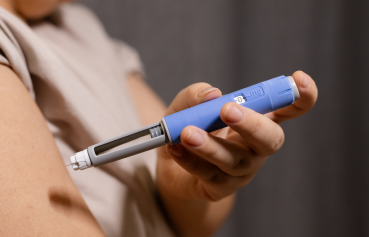









The FDA-approved oral semaglutide pill offers a needle-free option for weight management. But like all GLP-1 medications, it comes with potential side effects worth understanding before you start.
Here's what clinical trials reveal about oral semaglutide side effects, how they compare to the injection, and practical ways to manage them.
Disclaimer: This article is for educational purposes only and doesn’t replace medical advice from a licensed healthcare provider. Oral semaglutide is a prescription medication and isn’t right for everyone. Treatment decisions, dosing, and timing should always be made with your care team.
10 Oral semaglutide side effects to know before starting
The Wegovy® pill, which is an oral semaglutide pill, received FDA approval in December 2025. The OASIS 4 trial was the key efficacy study for the oral tablet, and most of what we know about its side effect profile comes from that research.
Overall, digestive adverse events were reported in 74% of patients taking oral semaglutide, compared to 42.2% on placebo (inactive pill).
Disclaimer: Some percentages below are drawn from injectable Wegovy® clinical trials reported in the FDA prescribing information. According to that same label, the types and frequency of common adverse reactions for the oral tablet are similar to those of the injection.
1. Nausea
Nausea is the most commonly reported side effect, affecting about 46.6% of patients in the OASIS 4 trial, compared to 18.6% on placebo. These symptoms tend to be mild to moderate and are most common during the dose-escalation period.
These symptoms generally improve once the dose-escalation period ends. Eating smaller, more frequent meals prepared with simple cooking methods can also help manage symptoms.
2. Diarrhea
Diarrhea is one of the most frequently reported side effects of oral semaglutide, often occurring alongside other digestive symptoms. Like other digestive side effects, it is usually mild to moderate and tends to improve over time.
Drink plenty of water during this time, since diarrhea can cause your body to lose fluids.
3. Vomiting
Vomiting was reported in about 30.9% of patients in the OASIS 4 trial, compared to 5.9% on placebo, and was more common during the dose-escalation period.
Check in with your care team if it's persistent or severe. A temporary dose adjustment may help.
4. Constipation
Constipation is a common side effect of semaglutide, reported in about 24% of people taking the injectable form in clinical trials. The FDA notes that side effects for the oral tablet are similar, so comparable rates are expected.
Constipation may also last longer than other stomach-related side effects like nausea. Eating more fiber and drinking plenty of water can help. If it doesn't ease up, your care team can suggest next steps.
5. Stomach and abdominal pain
Stomach and abdominal pain, including upper and lower, is reported in about 20% of people taking Wegovy® in clinical trials, with similar rates expected for the oral tablet. Like other gut side effects, it tends to be mild to moderate.
That said, severe or lasting pain is worth bringing up with your care team right away. In rare cases, it can be a sign of pancreatitis, which needs prompt medical attention.
6. Fatigue
Some people taking oral semaglutide report feeling tired. This may be linked to eating fewer calories and losing weight. GLP-1 medications are known to reduce appetite and food intake. It could also be your body getting used to the medication.
If fatigue is affecting your daily life, talk to your care team about adjusting your dose or nutrition plan.
7. Headache and dizziness
Headache is often linked to changes in eating patterns or hydration during GLP-1 RA therapy. Dizziness is also commonly reported, and may relate to reduced food intake or fluid loss.
Staying hydrated and not skipping meals entirely can make a real difference.
8. Gas, bloating, and burping
Flatulence, abdominal distension, and burping are all reported with oral semaglutide. These are a byproduct of how GLP-1 medications slow digestion.
Eating slowly and in smaller portions may help. These symptoms often ease over time as your body adjusts to the medication.
9. Acid reflux (GERD)
Gastroesophageal reflux disease is reported with oral semaglutide. Lying down soon after eating can make it worse.
Eating smaller meals and raising the head of your bed while sleeping may help. Noticing foods that seem to trigger your symptoms can help you identify the foods that sit best.
10. Skin sensitivity (unique to oral formulation)
Some people taking the Wegovy® pill report skin sensitivity, including burning feelings, tingling, or being more sensitive to touch. This was reported in 4.9% of people taking the tablet, compared to 0% on placebo.
While it can happen with the injectable form too, it's much less common (2% compared to placebo). Let your care team know if it feels bothersome or doesn't go away.
Important safety information: Thyroid tumors
Oral semaglutide carries a boxed warning related to certain specific thyroid tumors called medullary thyroid cancer, based on animal studies. The risk in humans isn't fully established, but it's important to keep in mind.
Tell your care team if you notice a lump in your neck, difficulty swallowing, hoarseness, or shortness of breath.
Oral semaglutide is contraindicated if you have a personal or family history of medullary thyroid carcinoma or MEN 2 syndrome.
When side effects typically start and how long they last
Most side effects start during the dose-escalation period, which lasts about 90 days (roughly 13 weeks) for the tablet. During this time, your dose can increase every 30 days: from 1.5 mg to 4 mg, then 9 mg, and finally to the 25 mg maintenance dose.
Stomach-related side effects like nausea and vomiting tend to be most common during this period and are generally mild to moderate and short-lived.
If side effects are hard to manage, your care team may slow down your escalation schedule. If the 25 mg maintenance dose doesn't work for you, your clinician may suggest switching to the injection at a lower dose.
Check in with your clinician if side effects feel impactful and disruptive. You shouldn’t suffer in silence. The knownwell team can work with you to troubleshoot any symptoms that arise.
5 Tips for managing oral semaglutide side effects
1. Follow dosing instructions precisely
Take your tablet in the morning on an empty stomach with no more than 4 oz of plain water. Swallow it whole; do not crush, split, or chew it.
Wait at least 30 minutes before eating, drinking anything else, or taking other medications. This helps your body absorb the medication and may reduce stomach-related side effects.
2. Eat smaller, more frequent meals
Large meals can make nausea and bloating worse. Focus on lean proteins, vegetables, and easy-to-digest foods while your body gets used to the medication.
Greasy or rich foods tend to be harder on your stomach when you're still getting used to the medication. Simple cooking methods like baking, steaming, or boiling are easier to tolerate.
3. Stay hydrated
Staying hydrated is especially important if you're dealing with diarrhea or vomiting. Dehydration can, in rare cases, lead to kidney problems.
Drink fluid in small sips and stop before you feel too full.
4. Don't rush the dose escalation
The gradual increase (from 1.5 mg to 4 mg to 9 mg to 25 mg) exists for a reason. It gives your body time to adjust.
If symptoms feel intense, your care team may keep you at a lower dose a little longer. Slowing down is always better than stopping treatment entirely.
5. Keep your care team informed
Track your symptoms between visits so you can share patterns. Check in with your care team if side effects feel impactful. You shouldn't suffer in silence.
Serious side effects: When to seek medical attention
These side effects are rare but require immediate attention.
How oral semaglutide side effects compare to the injection
Overall, the side effect profiles are similar - both are mostly stomach-related, including nausea, vomiting, diarrhea, and constipation. The FDA prescribing information for the oral tablet notes that the types and frequency of common adverse reactions are comparable to those of the injection.
In the OASIS 4 trial, serious adverse events were less frequent with the oral formulation (3.9%) than with placebo (8.8%).
The injection, on the other hand, can cause injection site reactions (e.g., redness, swelling, or bruising), which the pill avoids entirely.
People have different preferences when it comes to treatment format, and both are valid options. Your care team can help you decide which is the better fit, or switch between the two if needed.
When managing oral semaglutide side effects feels overwhelming
Starting a GLP-1 medication like oral semaglutide is a significant step, and navigating side effects on your own can feel frustrating. You might wonder if what you're experiencing is normal, whether you should push through, or if there's a better approach for your body.
Everyone responds to these medications differently, and having a care team that understands GLP-1 therapies can make the adjustment period much smoother.
What knownwell offers:
- Physicians and Nurse Practitioners/Physician associates experienced in prescribing and managing FDA-approved GLP-1 medications
- Registered dietitians who can tailor your eating patterns to minimize side effects
- Personalized guidance on dose timing and escalation based on your response
- Ongoing check-ins so you're never navigating symptoms alone
Ready to get started?
- Virtual visits: Available from home in all 50 states
- In-person clinics: Boston area, Chicago, Dallas/Fort Worth, and Atlanta
- Insurance accepted: Most major plans offer coverage. See if we accept your insurance.
Book a visit with knownwell today to help you find the right balance of medication, nutrition, and lifestyle support so you can manage oral semaglutide side effects with confidence.
Frequently asked questions
How long do oral semaglutide side effects last?
Oral semaglutide side effects usually happen during the dose-escalation period, which lasts about 90 days for the tablet. During this time, your dose goes up every 30 days until you reach the 25 mg maintenance dose. Side effects are generally mild to moderate and short-lived.
In the OASIS 4 trial, only 6.9% of people stopped taking the tablet due to side effects - close to the 5.9% who stopped on placebo. If side effects are hard to manage, your care team may slow down your dose schedule.
Are Wegovy® pill side effects worse than the injection?
Not necessarily. The overall side effect profiles are similar, both are mostly stomach-related. The main difference is that skin sensitivity (like tingling or burning) is more common with the pill (4.9%) than with the injection (2%).
Can I take anything for nausea while on oral semaglutide?
Check with your care team before taking anything. They can recommend safe options based on your health history and current medications.
What happens if I eat too soon after taking my semaglutide pill?
Eating within 30 minutes of taking the tablet can reduce how much of the medication your body absorbs, which affects how well it works.
Try to build the dosing window into your morning routine.
Should I stop taking oral semaglutide if I have side effects?
Don't stop taking oral semaglutide without talking to your care team first. Most digestive side effects tend to improve over time, especially once you reach the maintenance dose.
Your care team can help you decide whether to adjust your dose, slow your escalation, or explore other options.
Do oral semaglutide side effects mean the medication is working?
Not necessarily. Side effects like nausea are caused by how GLP-1 medications affect digestion, not by the weight loss itself. They are not a reliable sign of how well the medication is working.
Weight management results generally become noticeable over the course of the dose-escalation period and beyond, which can take several months.
Can side effects return if I miss doses and restart?
Yes, side effects can return if you've been off the medication and restart.
For the injection, if you miss two or more doses in a row, you should contact your care team to discuss next steps for dosing.
For the tablet, the label only covers single missed doses (skip it and take the next one the following day) but doesn't address longer breaks. If you've been off the medication for more than a few days, check with your care team about how to restart safely.
Are there any foods that make oral semaglutide side effects worse?
Greasy or fried foods tend to make stomach-related side effects worse because they slow digestion even further. Large meals can also increase nausea and bloating.
Sticking to smaller, balanced meals with simple cooking methods like baking or steaming can help during the adjustment period.
Source list
Barrea, L., Annunziata, G., Verde, L., et al. (2025). A multidisciplinary perspective on semaglutide treatment and medical nutrition therapy in obesity management. Current Obesity Reports, 14(1), 73. doi:10.1007/s13679-025-00667-3. Retrieved from https://pmc.ncbi.nlm.nih.gov/articles/PMC12549762/
Ferreira, E. T., Garcia, L. M. P., Londero, R. G. (2025). Headache and GLP-1 receptor agonists: When medications are therapeutic and when they contribute to the symptom. Arquivos de Neuro-Psiquiatria, 83(10), s00451812303. doi:10.1055/s-0045-1812303. Retrieved from https://pmc.ncbi.nlm.nih.gov/articles/PMC12558699/
Fujita, N., Yasuda, I., Endo, I., et al. (2023). Evidence-based clinical practice guidelines for cholelithiasis 2021. Journal of Gastroenterology, 58(9), 801-833. doi:10.1007/s00535-023-02014-6. Retrieved from https://pmc.ncbi.nlm.nih.gov/articles/PMC10423145/
Gentinetta, S., Sottotetti, F., Manuelli, M., et al. (2024). Dietary recommendations for the management of gastrointestinal symptoms in patients treated with GLP-1 receptor agonist. Diabetes, Metabolic Syndrome and Obesity, 17, 4817-4824. doi:10.2147/DMSO.S494919. Retrieved from https://pmc.ncbi.nlm.nih.gov/articles/PMC11668918/
Gibbons, C., Blundell, J., Tetens Hoff, S., et al. (2021). Effects of oral semaglutide on energy intake, food preference, appetite, control of eating and body weight in subjects with type 2 diabetes. Diabetes, Obesity and Metabolism, 23(2), 581-588. doi:10.1111/dom.14255. Retrieved from https://pmc.ncbi.nlm.nih.gov/articles/PMC7839771/
Gorgojo-Martínez, J. J., Mezquita-Raya, P., Carretero-Gómez, J., et al. (2022). Clinical recommendations to manage gastrointestinal adverse events in patients treated with GLP-1 receptor agonists: A multidisciplinary expert consensus. Journal of Clinical Medicine, 12(1), 145. doi:10.3390/jcm12010145. Retrieved from https://pmc.ncbi.nlm.nih.gov/articles/PMC9821052/
Goyal, A., Daneshpajouhnejad, P., Hashmi, M. F., et al. (2023). Acute kidney injury. In StatPearls. Treasure Island, FL: StatPearls Publishing. Retrieved from https://www.ncbi.nlm.nih.gov/books/NBK441896/
Johnson, B. V. B. (2026). Fiber supplementation during and after GLP-1RA treatment: A perspective on clinical benefits. The Journal of Nutrition, 101436. doi:10.1016/j.tjnut.2026.101436. Retrieved from https://pubmed.ncbi.nlm.nih.gov/41730476/
Kommu, S., Whitfield, P. (2024). Semaglutide. In StatPearls. Treasure Island, FL: StatPearls Publishing. Retrieved from https://www.ncbi.nlm.nih.gov/books/NBK603723/
Mathew, P., Thoppil, D. (2022). Hypoglycemia. In StatPearls. Treasure Island, FL: StatPearls Publishing. Retrieved from https://www.ncbi.nlm.nih.gov/books/NBK534841/
Ness-Jensen, E., Hveem, K., El-Serag, H., et al. (2016). Lifestyle intervention in gastroesophageal reflux disease. Clinical Gastroenterology and Hepatology, 14(2), 175–182.e3. doi:10.1016/j.cgh.2015.04.176. Retrieved from https://pmc.ncbi.nlm.nih.gov/articles/PMC4636482/
Novo Nordisk. (2025, December 22). FDA approves Novo Nordisk's Wegovy® pill, the first and only oral GLP-1 for weight loss in adults [Press release]. Retrieved from https://www.prnewswire.com/news-releases/fda-approves-novo-nordisks-wegovy-pill-the-first-and-only-oral-glp-1-for-weight-loss-in-adults-302648344.html
Novo Nordisk. (2025, September 17). Novo Nordisk's oral semaglutide 25 mg (Wegovy® in a pill) delivered 16.6% weight loss in people with obesity in a newly published study [Press release]. Retrieved from https://www.globenewswire.com/news-release/2025/09/17/3152045/0/en/Novo-Nordisk-s-oral-semaglutide-25-mg-Wegovy-in-a-pill-delivered-16-6-weight-loss-in-people-with-obesity-in-a-newly-published-study.html
Pardo-Cabello, A. J., Manzano-Gamero, V., Puche-Cañas, E. (2022). Placebo: A brief updated review. Naunyn-Schmiedeberg's Archives of Pharmacology, 395(11), 1343-1356. doi:10.1007/s00210-022-02280-w. Retrieved from https://pmc.ncbi.nlm.nih.gov/articles/PMC9361274/
U.S. Food and Drug Administration. (2025). Wegovy® (semaglutide) tablets, for oral use: Prescribing information. Retrieved from https://www.accessdata.fda.gov/drugsatfda_docs/label/2025/218316Orig1s000lbl.pdf
Wharton, S., Calanna, S., Davies, M., et al. (2022). Gastrointestinal tolerability of once-weekly semaglutide 2.4 mg in adults with overweight or obesity, and the relationship between gastrointestinal adverse events and weight loss. Diabetes, Obesity and Metabolism, 24(1), 94–105. doi:10.1111/dom.14551. Retrieved from https://pmc.ncbi.nlm.nih.gov/articles/PMC9293236/
Wharton, S., Lingvay, I., Bogdanski, P., et al. (2025). Oral semaglutide at a dose of 25 mg in adults with overweight or obesity. New England Journal of Medicine, 393(11), 1077-1087. doi:10.1056/NEJMoa2500969. Retrieved from https://www.nejm.org/doi/10.1056/NEJMoa2500969
