











%20(2).jpg)
It is recommended that you walk 7,000 to 10,000 steps a day for good weight management and overall health. However, walking duration matters more than daily step count for weight loss.
Disclaimer: This article is solely for educational purposes. As with any physical activity program, consult your healthcare team before significantly increasing your activity level, especially if you have existing health conditions.
What research says about how many steps you need to walk to lose weight
Walking 7,000 to 10,000 steps a day provides the greatest health benefit. Greater physical activity supports overall health, including a healthy weight.
A 2020 study found that people who walked at least 8,000 steps per day were over 50% more likely to live longer than those who walked only 4,000 steps a day.
Some research shows that for each additional 1,000 steps you walk per day, there is an additional 0.46 pounds of weight loss over 18 months when combined with a calorie-restricted diet.
Further, for more moderate-to-vigorous intensity steps performed in bouts of at least 10 minutes each, an additional 1,000 steps per day means 0.73 pounds more weight loss.
A review of nine studies showed that participants who were engaged in walking programs to increase their daily steps by 2,000 to 4,000 steps (roughly 1 to 2 miles of additional walking) experienced weight loss of about 2.8 pounds over an average of 16 weeks.
What this review demonstrated is that duration matters more than daily step count: Longer walking programs produced significantly greater weight loss than shorter programs, and the longer a participant was engaged in a walking program, the more weight they lost. Consistency is key!
Realistic expectations: While 10,000 steps is a widely recommended goal, the research shows that:
- Even increasing by 2,000 steps daily (about 1 mile or 20 minutes of walking) produced measurable health benefits.
- Weight loss from walking alone is modest without nutrition and eating changes.
- The key is consistency over time. Walking 7,000 steps five days a week (40,000 steps weekly) often yields better results than sporadic days of 15,000 steps followed by days of minimal movement.
The important thing is to start where you are, gradually increase your daily steps, and focus on sustainable weekly totals rather than stressing over daily perfection.
The knownwell care team can help you set realistic goals based on your current activity level and health status.
What affects how many steps you need to walk to lose weight?
The exact number of steps you need to walk to lose weight is not fixed, but rather it depends on walking pace, your metabolism, eating patterns, your starting weight, and overall health.
Walking speed and intensity
Faster walking increases energy used because of increased heart rate, respiratory rate, and muscle movement.
The general calorie estimates for walking include:
- Slow pace (2 mph): Burns about 176 calories per hour (for a 155-lb person)
- Moderate pace (3 mph): Burns about 246 calories per hour (for a 155-lb person)
- Brisk pace (4 mph): Burns about 281 calories per hour (for a 155-lb person)
At a faster pace, there is more muscle movement and increased energy demands, both during and slightly after exercise.
What this means for you: Walking 8,000 steps briskly burns about the same calories as 10,000 steps at a moderate pace.
Disclaimer: While we reference calorie estimates to help you understand energy expenditure, knownwell focuses on sustainable eating patterns rather than calorie counting. Your dietitian will help you build habits without tracking every number.
Nutrition and overall calorie intake
Walking helps you burn more energy. But if you’re eating more throughout the day (without noticing), you can end up consuming the same amount of calories (or more) than you burned.
A 2019 study found that people who increased physical activity without nutrition guidance often consumed 250 to 500 additional calories daily, cancelling out much of the energy they burned through exercise.
This can happen because:
- People overestimate calories burned during activity.
- “Exercise rewards” (treating yourself after walking) add back calories.
What this means for you: Walking alone typically produces modest weight loss (2 to 3% of body weight over 6 months), but when combined with attention to eating patterns, results improve significantly (8 to 12% of body weight).
For maintaining weight, working with a knownwell registered dietitian can help you balance movement and nutrition effectively.
Current fitness level and lean muscle mass
The fitness level you’re starting out with affects how much energy you burn at rest (basal metabolic rate) and during activity.
For instance, someone with more muscle mass has a higher resting metabolism, burning more energy during all activities, including walking.
As you become more fit, your body becomes used to walking. This sounds positive, but it means you burn less energy doing the same activity as you did when you started.
What this means for you: This is one reason why combining walking with resistance training 2 to 3 times a week helps maintain metabolic rate during weight loss. Preserving or building muscle prevents the metabolic slowdown that makes weight loss harder over time.
General health and medical conditions
Health conditions like hypothyroidism, polycystic ovary syndrome (PCOS), and insulin resistance affect weight loss response to activity.
Additionally, sleep quality, stress levels, and medications (certain antidepressants, antipsychotics, beta-blockers) can all influence your metabolism and weight loss response.
What this means for you: If you're walking consistently and eating well, and not seeing expected results, underlying metabolic issues might need evaluation.
Consider asking your healthcare team to assess thyroid function, insulin sensitivity, and other factors that influence how your body responds to increased activity.
Starting weight and body composition
Moving a larger mass requires more energy, meaning that when you weigh more, your body works harder with each step.
Heavier body mass increases the amount of energy used per mile walked. This happens because:
- A greater weight requires more muscular effort to move.
- Heart rate must increase to circulate more blood through all tissues.
- More energy is needed to stabilize joints and maintain balance.
What this means for you: If you have more weight to lose initially, you'll burn more energy per step than someone at a lower weight. This is why people often see faster initial weight loss, and then it becomes more difficult to lose weight.
Therefore, as you lose weight, you may need to increase steps or adjust your pace.
How much weight can you lose walking 10,000 steps a day?
A 36-week (9-month) study of adults with overweight or obesity found that participants who walked 10,000 steps per day lost about 5.3 pounds of body weight over the study period.
Some people achieve their weight loss goals by walking less than 10,000 steps per day when combined with balanced eating patterns.
How many steps a week should you aim to walk to lose weight?
Thinking in weekly totals rather than daily targets can feel more manageable and less stressful. Therefore, aim for 50,000 to 70,000 steps per week as a starting goal.
Here's how that breaks down depending on your schedule:
For 7-day walkers:
- Target: about 7,000 to 10,000 steps per day to lose weight
- Weekly total: 49,000 to 70,000 steps
For 5-day walkers:
- Target: about 10,000 to 14,000 steps on active days
- Weekly total: 50,000 to 70,000 steps
- Allows for two rest or low-activity days (important for recovery)
For beginners:
- Start with 30,000 to 40,000 steps per week
- Gradually increase by 5,000 to 10,000 steps weekly
- Build consistency before adding volume
These weekly goals provide flexibility and can fit into your schedule. If you have a busy Tuesday with only 3,000 steps, you can make up for it with extra movement on Wednesday or Saturday.
Exercise has been shown to help with maintaining weight loss rather than losing weight. You should walk to keep your weight off and for other health reasons, not in order to lose weight.
Steps vs. other health measures that matter
While step count is a useful measurement, other factors contribute just as much to successful weight management.
When you focus only on steps, you can miss important aspects of overall activity and health, including:
Time on feet
Standing burns more energy than sitting, even without walking. Research indicates that replacing prolonged sitting with standing can modestly increase weekly energy expenditure, though the additional burn is considerably lower than 320 calories.
When you stand, your body engages muscles throughout your legs, core, and back to maintain balance and posture. Blood flow increases, and your heart works slightly harder than when sitting.
You can increase how much energy you use without necessarily adding steps by doing small things like standing at your work desk or while on the phone.
These small differences add up over hours and days.
Energy levels and sleep quality
Poor sleep disrupts the hormones that regulate hunger and fullness. Research found that people managing their weight who slept 5.5 hours per night lost 55% less body fat compared to those sleeping 8.5 hours, even when eating the same calories.
Sleep deprivation increases ghrelin (hunger hormone) and decreases leptin (fullness hormone). This hormone change increases appetite by an average of 300 to 400 calories daily and creates stronger cravings for high-calorie, high-carbohydrate foods.
Also, poor sleep reduces insulin sensitivity, meaning your body can’t process carbohydrates as well and instead stores energy as fat. It also decreases motivation for physical activity; people who sleep poorly naturally take fewer steps without consciously deciding to be less active.
Overall nutrition
Research consistently shows that exercise alone produces modest weight loss, usually 2 to 3% of body weight over 6 months on average. However, when combined with nutrition changes, this increases to 8 to 12% of body weight.
Combining increased movement with good eating habits produces results neither approach achieves alone.
The knownwell team includes registered dietitians who can help you understand your individual energy needs, identify eating patterns that support your activity level, and create sustainable approaches that don't feel restrictive. This approach addresses both movement and nutrition without making either feel like punishment.
Tips to get more steps in
Consistency predicts long-term success better than intensity or volume. Below are some ways you can use to walk more consistently:
Break it up throughout the day
Breaking up sitting time with short walking breaks improves post-meal blood sugar compared to continuous sitting.
Try a morning walk before breakfast (this can also help with blood sugar regulation), a midday walk during lunch (this breaks up sitting and provides a mental refresh), and an evening walk after dinner (this helps with digestion and can improve sleep quality).
Track your steps with a phone or wearable device
Tracking your number of steps provides immediate feedback, creates accountability, and allows you to see patterns.
You might discover you walk much more on certain days or that specific activities (like grocery shopping or walking to meetings) contribute more steps than expected.
While these targets provide useful benchmarks, focus on weekly trends rather than stressing if you miss your target on individual days.
You don't need expensive wearables. Most smartphones have built-in step counters in free, downloadable health apps.
Create walk triggers in your routine
Walking 10 to 15 minutes after eating aids digestion and improves blood sugar management. If your work allows it, take phone calls while walking.
You can establish a walk as part of your morning routine (like after coffee) or evening routine (like after dinner).
Try linking walking to something you enjoy, such as podcasts, audiobooks, music playlists, or phone calls with friends. This makes walking feel less like “exercise” and more like an enjoyable time that happens to include movement.
Make it enjoyable
Varying your route prevents boredom. Explore new neighborhoods, parks, or trails. The mental stimulation of new scenery makes time pass faster and keeps walking interesting.
You should also consider investing in comfortable, supportive walking shoes. Discomfort from poor footwear is a common reason people abandon walking routines. You don't need expensive athletic shoes, just properly fitting shoes with adequate cushioning and arch support for your foot type.
The role of weight loss medication
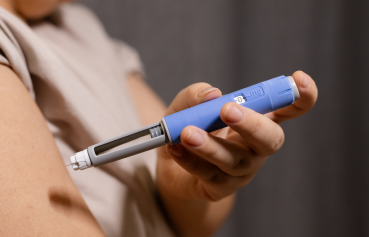
If you're taking GLP-1 medications (like semaglutide [Wegovy] or tirzepatide [Zepbound]) or other weight management medications, walking can complement your treatment plan effectively.
Many people find that light walking after meals can help with digestion and reduce feelings of bloating or fullness, which may be helpful since GLP-1 medications slow gastric emptying.
If you're on weight management medications, ensuring adequate protein intake (1.2 to 1.5 grams per kilogram of ideal body weight) becomes especially important when walking regularly.
The combination of weight loss from the medication and increased physical activity can lead to muscle loss if protein is insufficient. Your knownwell registered dietitian can help you with this.
Always listen to your body. Some days, especially when adjusting to medication, energy levels may be lower. It's fine to reduce intensity or volume on those days. Consistency over months matters more than perfection on any single day.
Beyond Weight Loss: Other health benefits of walking
Walking does much more than just help you lose weight. Research shows that walking regularly can improve your sleep, boost your energy, reduce stress, and help your mental health.
One study found that people who walked 10,000 steps daily for just four weeks fell asleep faster and slept longer each night. Another study discovered that when people took more steps than usual, they reported sleeping better that same night.
Walking also helps with stress and anxiety. A major review of 75 studies found that walking significantly reduced symptoms of both depression and anxiety.
Even short walks can make a difference: Walking for just 25 minutes three times per week can help you feel less stressed and more positive.
The good news is that you don't need to walk for hours to see these benefits. Any amount of walking can help you feel better, sleep better, and handle stress more easily.
When walking alone isn’t enough
Walking supports cardiovascular health, metabolic function, overall wellness, and weight management, but some people may need additional support, like:
- Dietary support: Walking burns energy, but creating a sustainable calorie deficit usually requires attention to eating patterns, too.
- Strength training: Adding resistance exercises 2 to 3 times weekly helps preserve lean muscle mass during weight loss. Your knownwell care team can help you develop a safe, appropriate strength training program for your fitness level.
- Medical support: For some individuals, lifestyle changes alone aren't enough for meaningful weight loss. This doesn't represent failure; it reflects how complex metabolic health is and the many factors that influence body weight beyond personal effort.
- Professional evaluation: If you're experiencing unexplained fatigue, difficulty losing weight despite consistent efforts, irregular menstrual cycles, or excessive daytime sleepiness, conditions like thyroid dysfunction, insulin resistance, PCOS, or sleep disorders could be contributing factors worth discussing with your healthcare team.
Before starting any new exercise program or making significant nutrition and eating pattern changes, consult with your healthcare team to make sure these changes are appropriate for your health status.
Build a weight loss plan that works with your lifestyle
Sustainable weight management requires a personalized approach that fits your life, preferences, and health status. Walking offers an accessible starting point, but it's just one component of health and wellness.
At knownwell, our registered dietitians and weight loss doctors work together to create individualized care plans that address your unique needs.
We consider your schedule, preferences, current activity level, eating patterns, metabolic health, and any obstacles you're facing.
We offer collaborative care planning without judgment. We can help you set realistic step goals, develop sustainable eating patterns, address barriers to consistency, and determine if medical support might benefit you.
What knownwell offers:
- Virtual visits in all 50 states
- In-person clinics in the Boston, Chicago, Dallas/Fort Worth, and Atlanta areas
- Insurance accepted
- Ongoing care that continues long after the holidays
Combined with balanced nutrition, adequate sleep, stress management, and, when appropriate, medical support, regular walking to lose weight can be highly effective.
knownwell can help you determine how many steps you need to walk to lose weight. Book your visit with knownwell to build a sustainable approach to weight loss.
Frequently Asked Questions
How many steps do I need to walk to lose weight and improve my health?
As a general guide, walking about 7,000 to 10,000 steps a day to burn fat, combined with balanced eating, can support gradual, sustainable weight loss.
How many calories do you burn walking 10,000 steps?
A 36-week (9-month) study of adults with overweight or obesity found that participants who walked 10,000 steps per day lost about 5.3 pounds of body weight over the study period.
Some people achieve their weight loss goals by walking less than 10,000 steps per day when combined with balanced eating patterns.
Is walking enough for weight loss, or do I need to do more?
Walking supports weight loss, especially when combined with a balanced eating pattern. However, adding strength training 2 to 3 times weekly helps preserve muscle mass during weight loss and supports long-term metabolic health.
The "best" approach is one you can maintain consistently; if that's walking alone initially, that's a great starting point. You can always add other activities as your fitness improves.
Do steps from daily tasks count toward weight loss?
Yes, steps taken during daily tasks absolutely count toward weight loss. Your body burns calories with all movement. This is why total daily step count provides a useful measurement, as it captures all movement, not just structured exercise.
Should I increase steps or focus on what I eat first in order to lose weight?
You should focus on both increasing step count and eating well, but starting with one change at a time often feels more manageable.
If you're currently not very active, gradually increasing the number of steps you walk every day can provide an accessible entry point while you work on eating pattern adjustments with a registered dietitian.
If you're already fairly active but your eating patterns need attention, focusing on nutrition first might yield faster results. Your knownwell care team can help you determine the best approach for your situation.
How does walking fit into a GLP-1 medication or weight loss plan?
Walking complements GLP-1 medication treatment and weight loss plans by supporting metabolic health, preserving lean muscle mass, and enhancing overall cardiovascular fitness.
Many people find that light walking after meals can help with digestion and reduce feelings of bloating or fullness, which may be helpful since GLP-1 medications slow gastric emptying.
Your knownwell care team will work with you to integrate physical activity appropriately into your care plan and the medication you are using.
What if I can't reach 7,000 to 10,000 steps daily?
Start where you are. If you're currently averaging 3,000 steps daily, increasing to 4,000 to 5,000 steps represents meaningful progress.
Remember, any increase in movement benefits your health. Your knownwell care team can help you set realistic, individualized goals based on your current activity level and any physical limitations you're managing.
References
Bravata, D. M., Smith-Spangler, C., Sundaram, V., et al. (2007). Using pedometers to increase physical activity and improve health: A systematic review. JAMA, 298(19), 2296–2304. Retrieved from https://doi.org/10.1001/jama.298.19.2296
Duvivier, B. M., Schaper, N. C., Bremers, M. A., et al. (2013). Minimal intensity physical activity (standing and walking) of longer duration improves insulin action and plasma lipids more than shorter periods of moderate to vigorous exercise (cycling) in sedentary subjects when energy expenditure is comparable. PLoS ONE, 8(2), e55542. Retrieved from https://doi.org/10.1371/journal.pone.0055542
Hopkins, M., Blundell, J. E., & King, N. A. (2014). Individual variability in compensatory eating following acute exercise in overweight and obese women. British Journal of Sports Medicine, 48(20), 1472–1476. Retrieved from https://doi.org/10.1136/bjsports-2012-091721
Hori, H., Ikenouchi-Sugita, A., Yoshimura, R., et al. (2016). Does subjective sleep quality improve by a walking intervention? A real-world study in a Japanese workplace. BMJ Open, 6:e011055. doi: 10.1136/bmjopen-2016-011055. Retrieved from https://bmjopen.bmj.com/content/6/10/e011055
Lee, Y.H, & Hwang, J. (2025). Walking for Mental Health: Effects of Mobile-Based Walking on Stress and Affectivity in College Students. International Journal of Mental Health Promotion, 27;2. Retrieved from https://doi.org/10.32604/ijmhp.2025.060685
Leproult, R., & Van Cauter, E. (2010). Role of sleep and sleep loss in hormonal release and metabolism. Endocrine Development, 17, 11–21. Retrieved from https://doi.org/10.1159/000262524
Maestu, J., Vaiksaar, S., Purge, P., et al. (2020). Resistance training and protein intake during energy deficit: The physiological and strength training adaptations in physically active adolescent females. Journal of Strength and Conditioning Research, 34(10), 2754–2764. Retrieved from https://doi.org/10.1519/JSC.0000000000003248
Morselli, L., Leproult, R., Balbo, M., et al. (2010). Role of sleep duration in the regulation of glucose metabolism and appetite. Best Practice & Research Clinical Endocrinology & Metabolism, 24(5), 687–702. Retrieved from https://doi.org/10.1016/j.beem.2010.07.005
Murton, A. J. (2022). Skeletal muscle protein turnover: The need to maintain a healthy state. In K. R. Feingold (Eds.), Endotext. MDText.com, Inc. Retrieved from https://www.ncbi.nlm.nih.gov/books/NBK584033/
Nishioka, B., Obeid, K., Lee, M., et al. (2025). Daily steps and health outcomes in adults: A systematic review and dose-response meta-analysis. The Lancet Public Health, 10(8), e668–e681. Retrieved from https://doi.org/10.1016/S2468-2667(25)00164-1
Paluch, A. E., Gabriel, K. P., Fulton, J. E., et al. (2021). Steps per day and all-cause mortality in middle-aged adults in the Coronary Artery Risk Development in Young Adults study. JAMA Network Open, 4(9), Article e2124516. Retrieved from https://doi.org/10.1001/jamanetworkopen.2021.24516
Paluch, A. E., Bajpai, S., Bassett, D. R., et al. (2022). Daily steps and all-cause mortality: A meta-analysis of 15 international cohorts. The Lancet Public Health, 7(3), e219–e228. Retrieved from https://doi.org/10.1016/S2468-2667(21)00302-9
Richardson, C. R., Newton, T. L., Abraham, J. J., et al. (2008). A meta-analysis of pedometer-based walking interventions and weight loss. Annals of Family Medicine, 6(1), 69–77. Retrieved from https://pmc.ncbi.nlm.nih.gov/articles/PMC2203404/
Saeidifard, F., Medina-Inojosa, J. R., West, C. P., et al. (2018). Differences of energy expenditure while sitting versus standing: A systematic review and meta-analysis. European Journal of Preventive Cardiology, 25(5), 522–538. Retrieved from https://doi.org/10.1177/2047487317752186
Saint-Maurice, P. F., Troiano, R. P., Bassett, D. R., Jr., et al. (2020). Association of daily step count and step intensity with mortality among US adults. JAMA, 323(12), 1151–1160. Retrieved from https://pubmed.ncbi.nlm.nih.gov/32207799/
Sanchez-Munoz, V., Espinosa-Flores, A. J., Gonzalez-Salazar, L. E., et al. (2015). Obesity and metabolic syndrome in adults. In K. R. Feingold (Eds.), Endotext. MDText.com, Inc. Retrieved from https://www.ncbi.nlm.nih.gov/books/NBK279077/
Schneider, P.L., Bassett, D.R. Jr, Thompson, D.L., et al. (2006). Effects of a 10,000 steps per day goal in overweight adults. Am J Health Promot, 21(2):85-9. doi: 10.4278/0890-1171-21.2.85. Retrieved from https://pubmed.ncbi.nlm.nih.gov/17152246/
Shaw, K., Gennat, H., O'Rourke, P., et al. (2006). Exercise for overweight or obesity. Cochrane Database of Systematic Reviews, 4, CD003817. Retrieved from https://doi.org/10.1002/14651858.CD003817.pub3
Sullivan Bisson, A.N., Robinson, S.A., Lachman, M.E. (2019) Walk to a better night of sleep: testing the relationship between physical activity and sleep. Sleep Health, 5(5):487-494. doi: 10.1016/j.sleh.2019.06.003. Retrieved from https://pmc.ncbi.nlm.nih.gov/articles/PMC6801055/
Swift, D. L., Johannsen, N. M., Lavie, C. J., et al. (2014). The role of exercise and physical activity in weight loss and maintenance. Progress in Cardiovascular Diseases, 56(4), 441–447. Retrieved from https://doi.org/10.1016/j.pcad.2013.09.012
Thomas, D. M., Martin, C. K., Lettieri, S., et al. (2013). Can a weight loss of one pound a week be achieved with a 3,500-kcal deficit? Commentary on a commonly accepted rule. International Journal of Obesity, 37(12), 1611–1613. Retrieved from https://doi.org/10.1038/ijo.2013.51
Tudor-Locke, C., Craig, C. L., Brown, W. J., et al. (2011). How many steps/day are enough? For adults. International Journal of Behavioral Nutrition and Physical Activity, 8, Article 79. Retrieved from https://doi.org/10.1186/1479-5868-8-79
Westcott, W. L. (2012). Resistance training is medicine: Effects of strength training on health. Current Sports Medicine Reports, 11(4), 209–216. Retrieved from https://doi.org/10.1249/JSR.0b013e31825dabb8
Westerterp, K. R. (2013). Physical activity and physical activity induced energy expenditure in humans: measurement, determinants and effects. Frontiers in Physiology, 4, 90. https://doi.org/10.3389/fphys.2013.00090
Wisconsin Department of Health Services. (n.d.). Walking: Your steps to health [PDF]. Retrieved from https://www.dhs.wisconsin.gov/publications
Xu, Z., Zheng, X., Ding, H., et al. (2024). The Effect of Walking on Depressive and Anxiety Symptoms: Systematic Review and Meta-Analysis. JMIR Public Health Surveill, 23;10:e48355. doi: 10.2196/48355. Retrieved from https://pubmed.ncbi.nlm.nih.gov/39045858/
